 Money Facts To Know
Two identical $100,000 investments end about $180,000 apart because of one fee
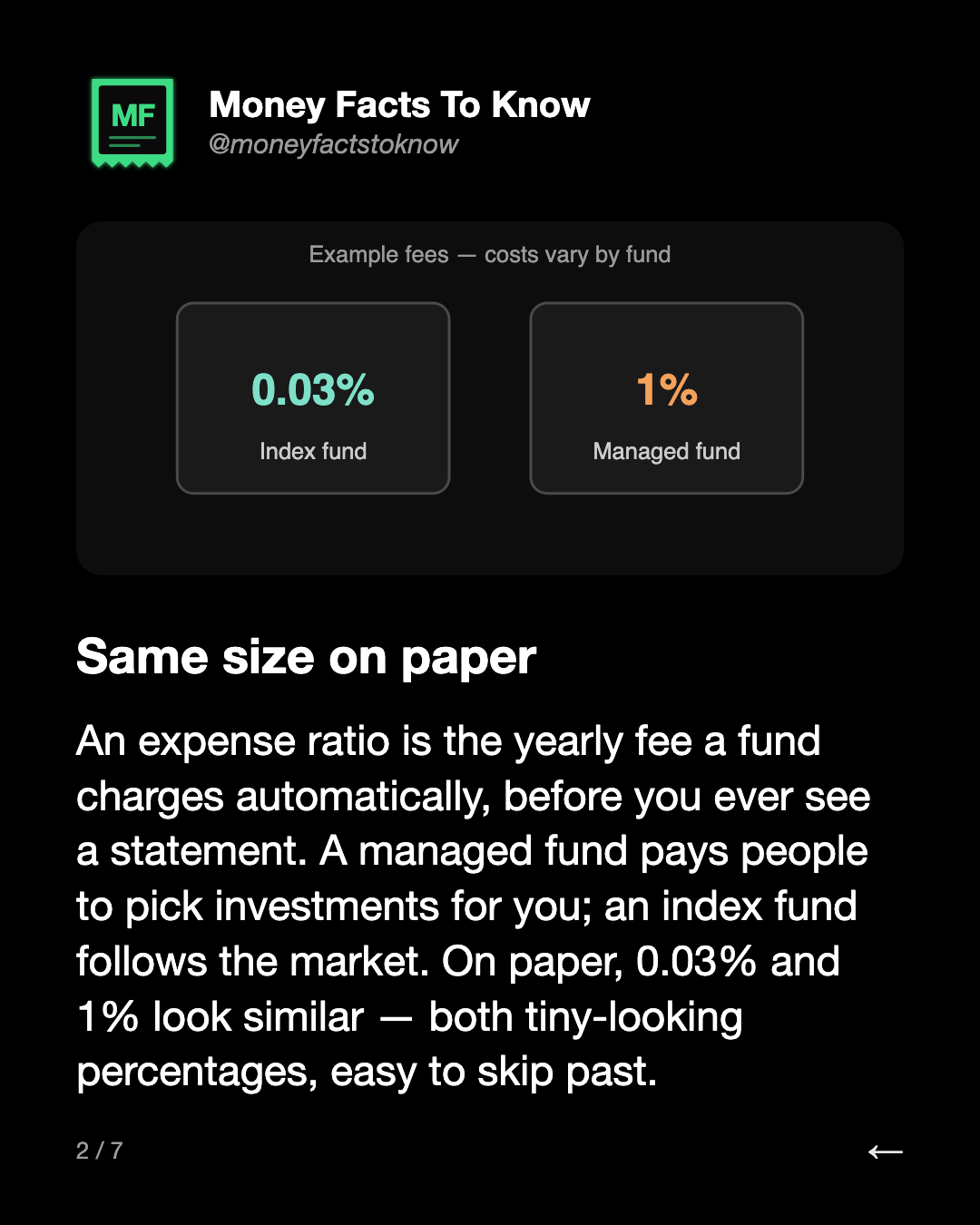
Same size on paper
An expense ratio is the yearly fee a fund charges automatically, before you ever see a statement. A managed fund pays people to pick investments for you; an index fund follows the market. On paper, 0.03% and 1% look similar — both tiny-looking percentages, easy to skip past.
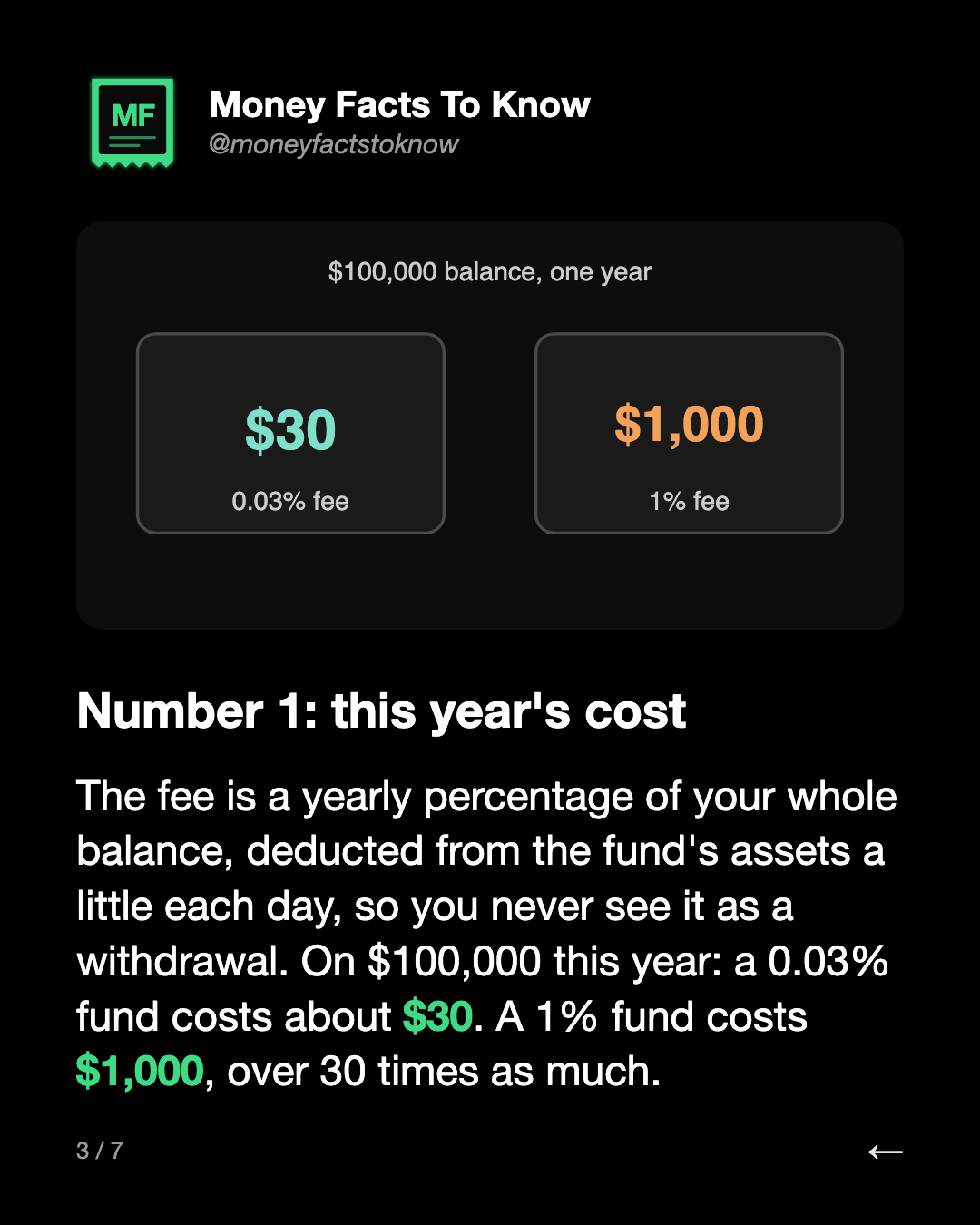
Number 1: this year's cost
The fee is a yearly percentage of your whole balance, deducted from the fund's assets a little each day, so you never see it as a withdrawal. On $100,000 this year: a 0.03% fund costs about $30. A 1% fund costs $1,000, over 30 times as much.
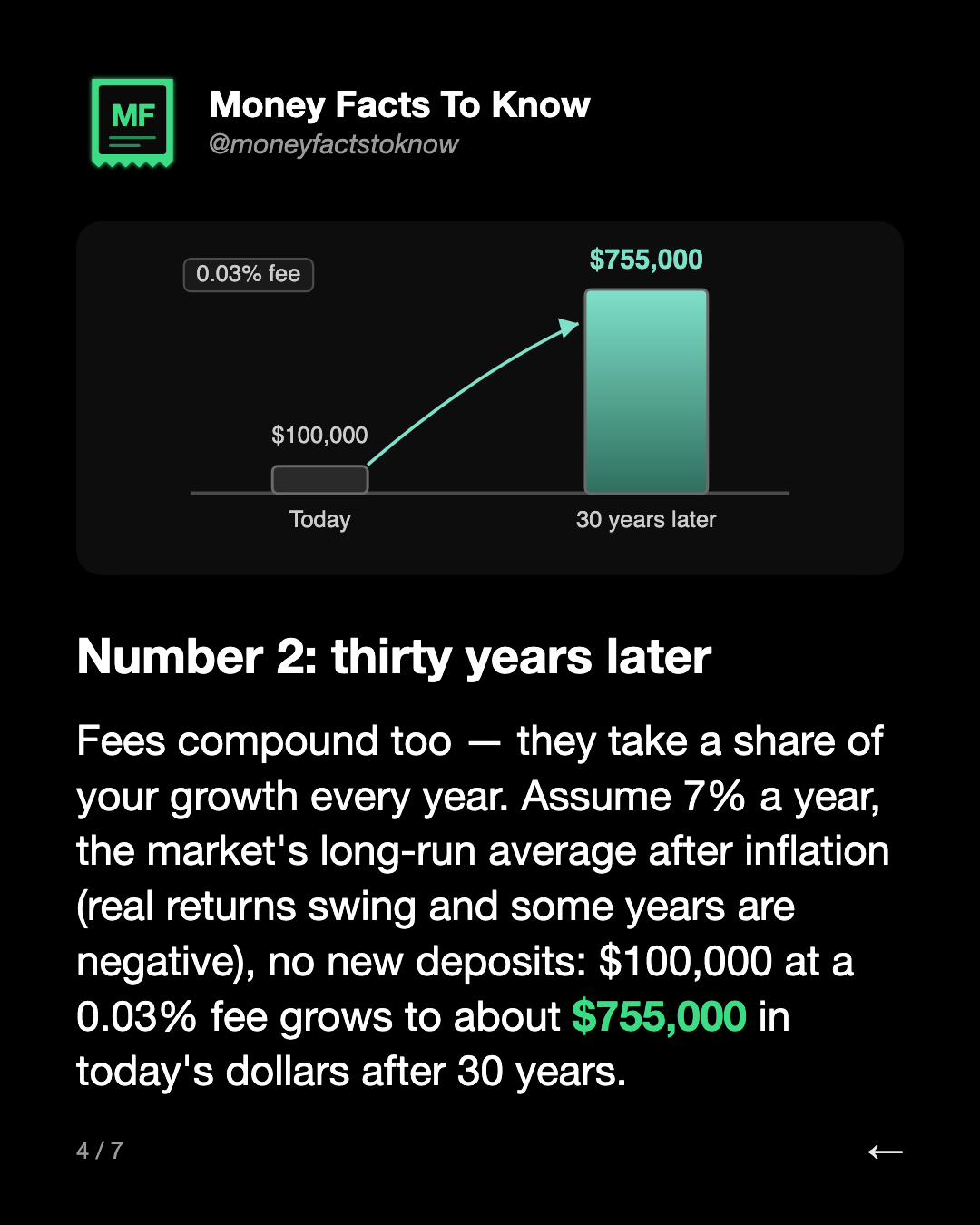
Number 2: thirty years later
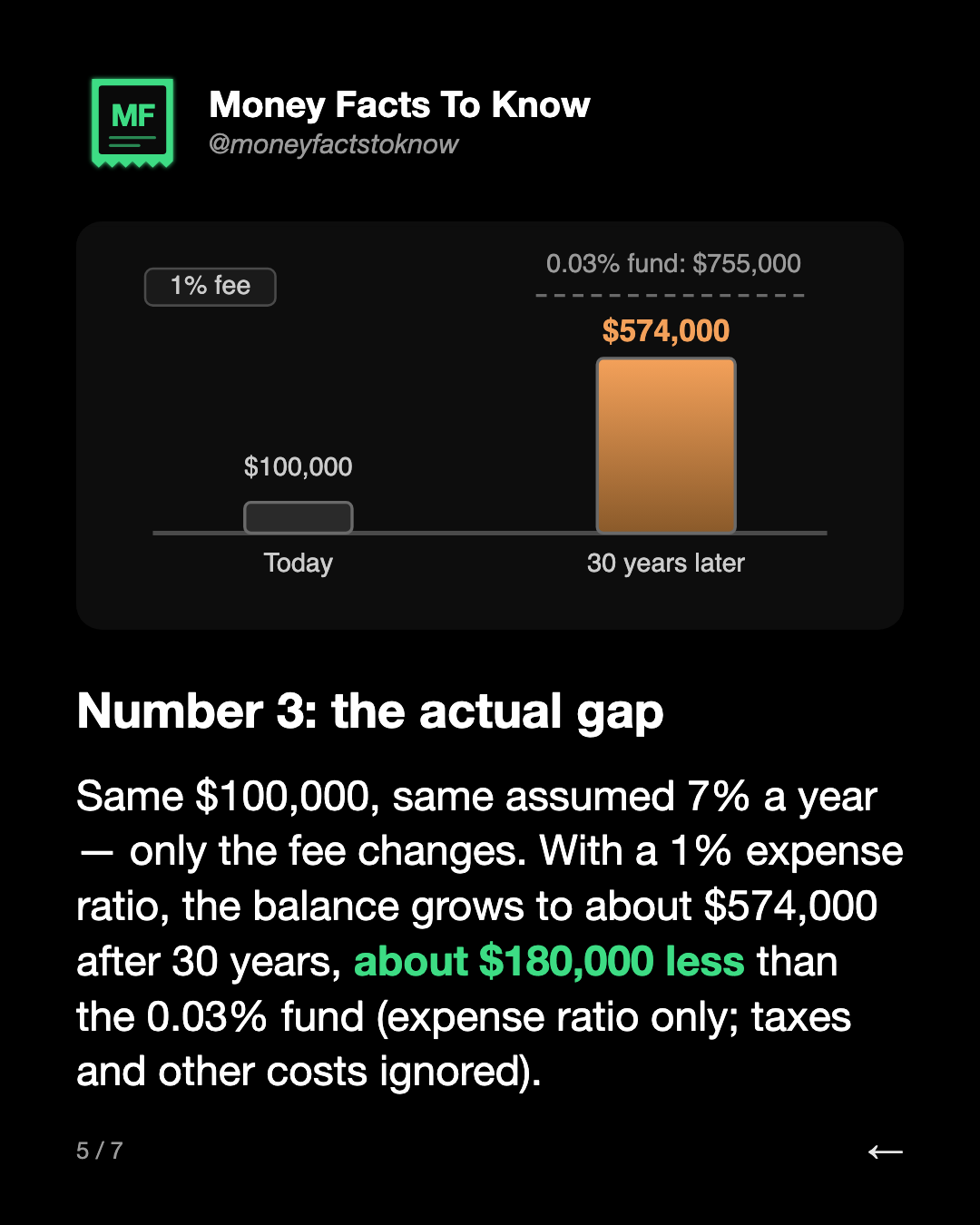
Fees compound too — they take a share of your growth every year. Assume 7% a year, the market's long-run average after inflation (real returns swing and some years are negative), no new deposits: $100,000 at a 0.03% fee grows to about $755,000 in today's dollars after 30 years.
Number 3: the actual gap
Same $100,000, same assumed 7% a year — only the fee changes. With a 1% expense ratio, the balance grows to about $574,000 after 30 years, about $180,000 less than the 0.03% fund (expense ratio only; taxes and other costs ignored).
Where to check the fee
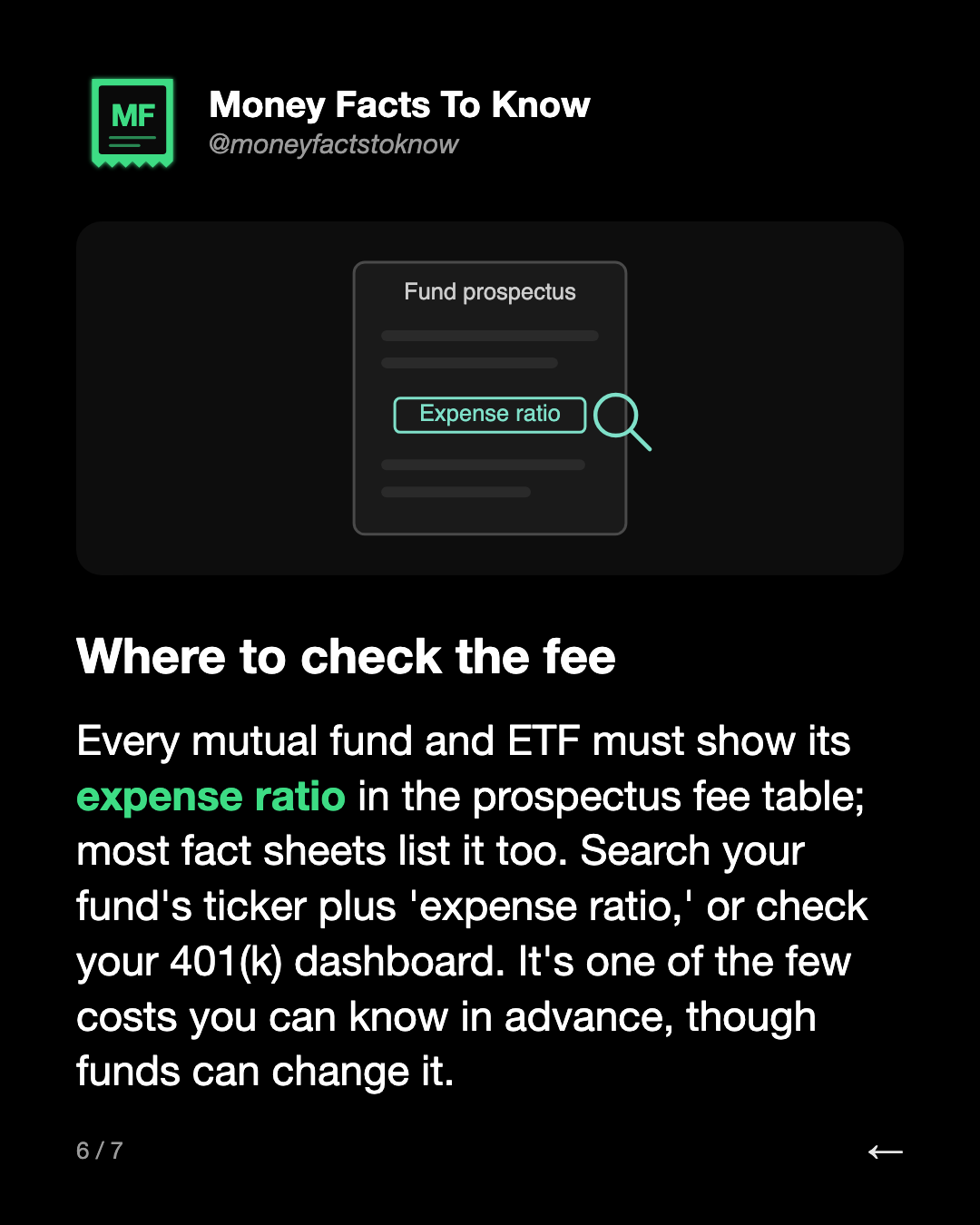
Every mutual fund and ETF must show its expense ratio in the prospectus fee table; most fact sheets list it too. Search your fund's ticker plus 'expense ratio,' or check your 401(k) dashboard. It's one of the few costs you can know in advance, though funds can change it.
Sources and assumptions
- NYU Stern (Damodaran), Historical returns on stocks, bonds and bills 1928–2025: S&P 500 real (after-inflation) compounded average of about 6.8% a year, 1928–2025; 30-year range about 4.3% to 10.1% (checked 2026-09-29)
- SEC Investor.gov, How fees and expenses affect your investment portfolio: Ongoing fees compound: you also lose the return the fee would have earned (checked 2026-09-29)
Assumptions:
- $100,000 lump sum, no new deposits, 30 years
- Assumed 7% a year after inflation, constant (real returns vary and some years are negative)
- Fee subtracted from the return each year (0.03% vs 1%); no taxes, loads or trading costs
- $100,000 × (1.07 − fee)^30: about $754,800 vs $574,300, a gap of about $180,500