 Money Facts To Know
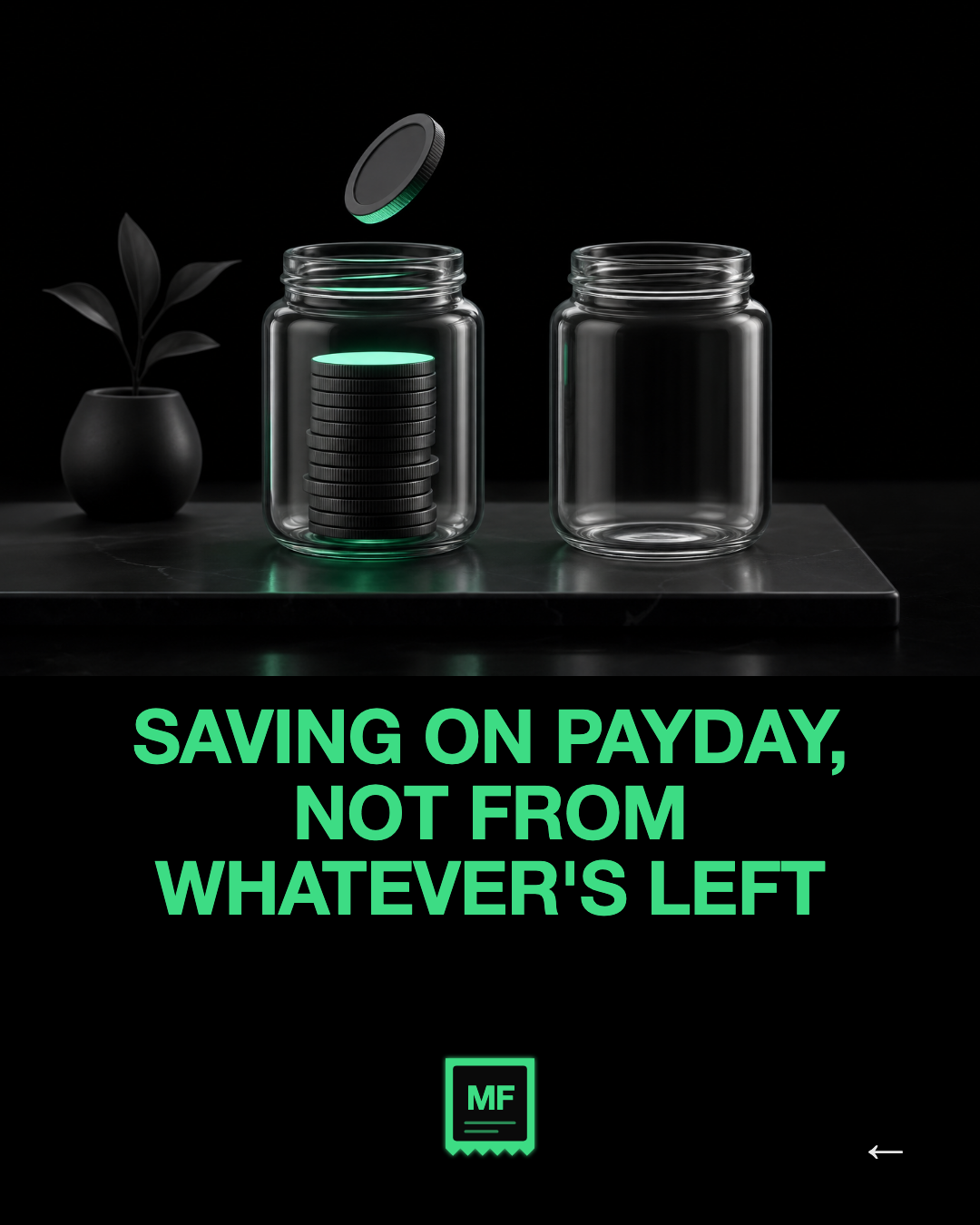
Saving on payday, not from whatever's left
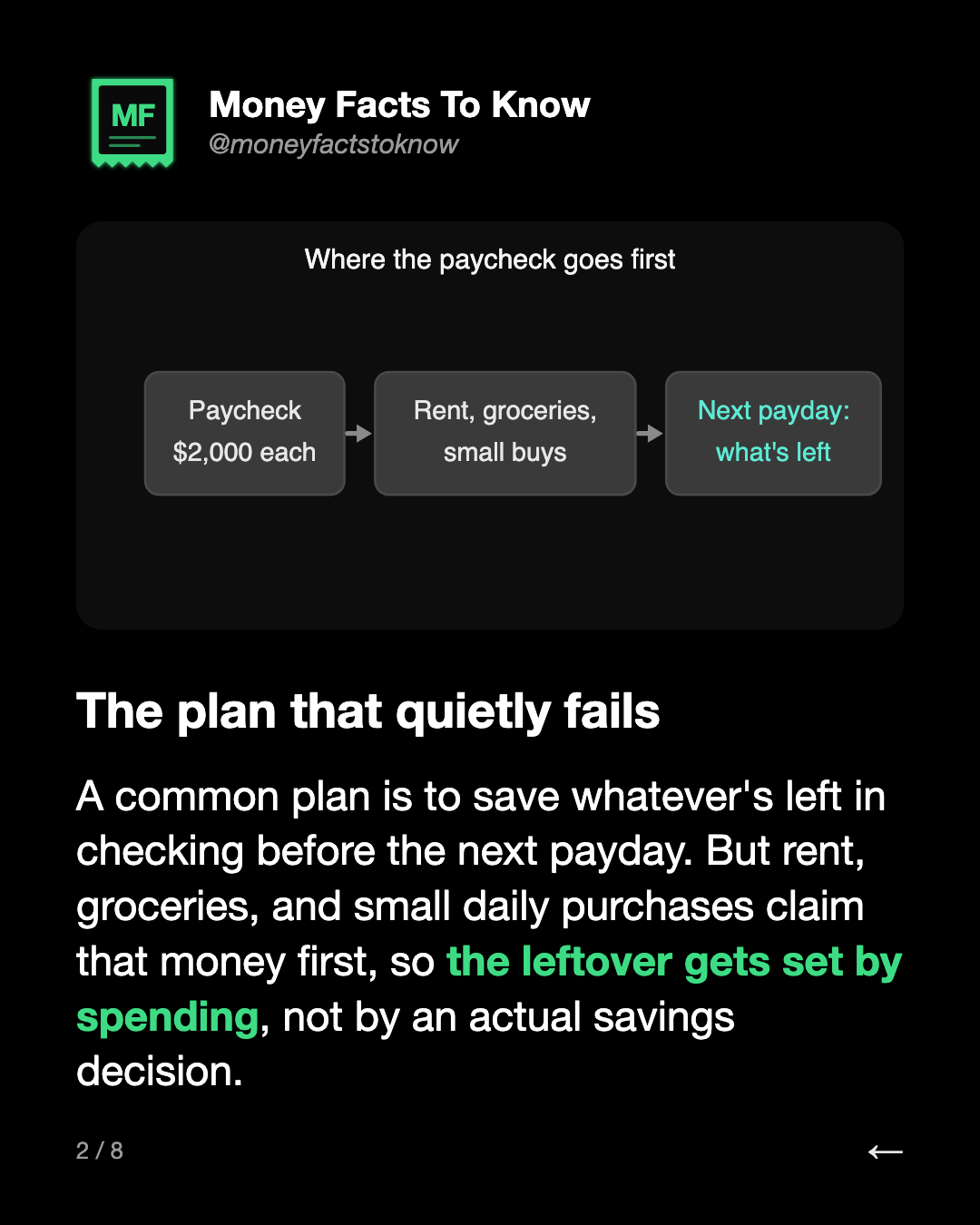
The plan that quietly fails
A common plan is to save whatever's left in checking before the next payday. But rent, groceries, and small daily purchases claim that money first, so the leftover gets set by spending, not by an actual savings decision.
What automation actually does
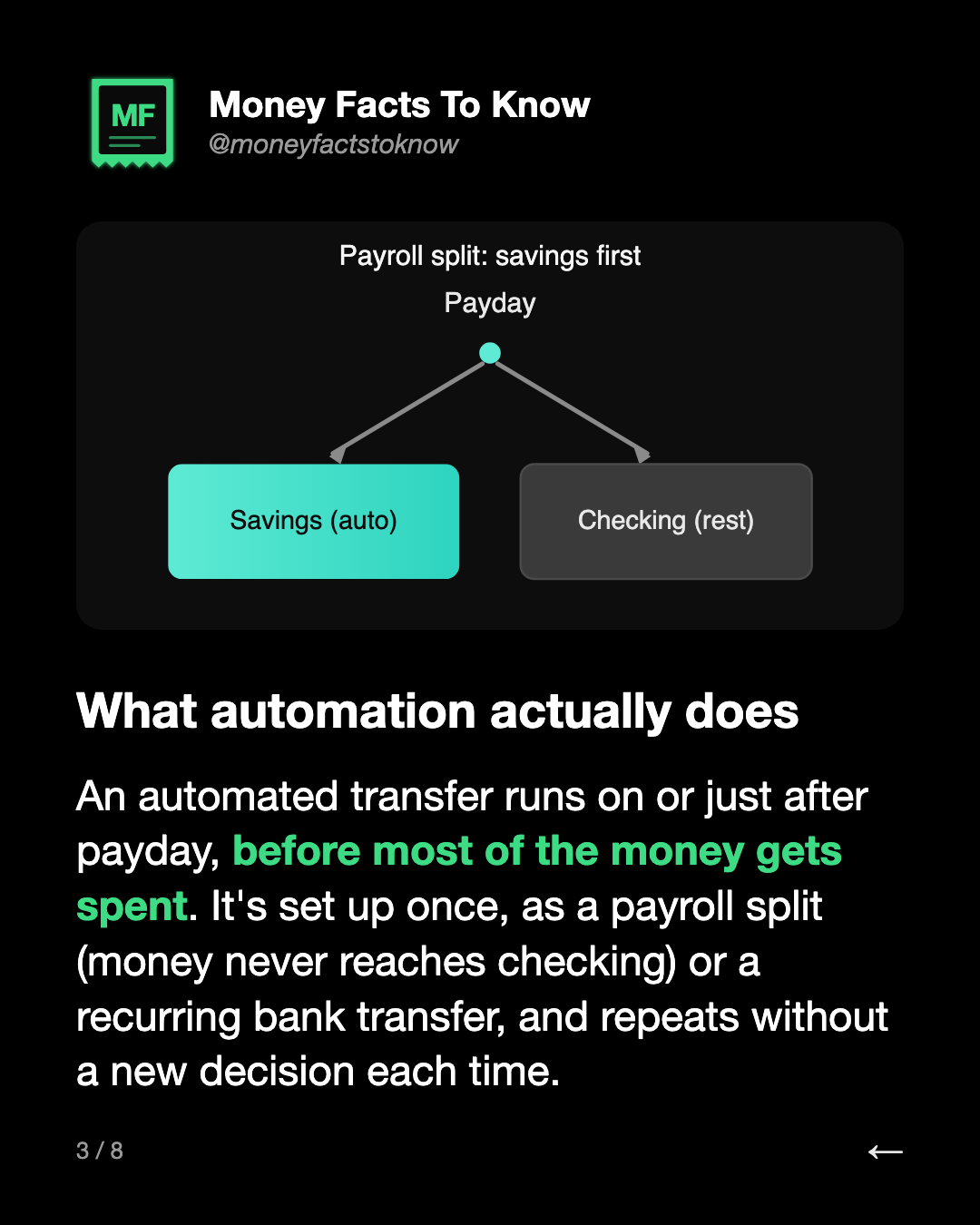
An automated transfer runs on or just after payday, before most of the money gets spent. It's set up once, as a payroll split (money never reaches checking) or a recurring bank transfer, and repeats without a new decision each time.
Why the smaller balance matters
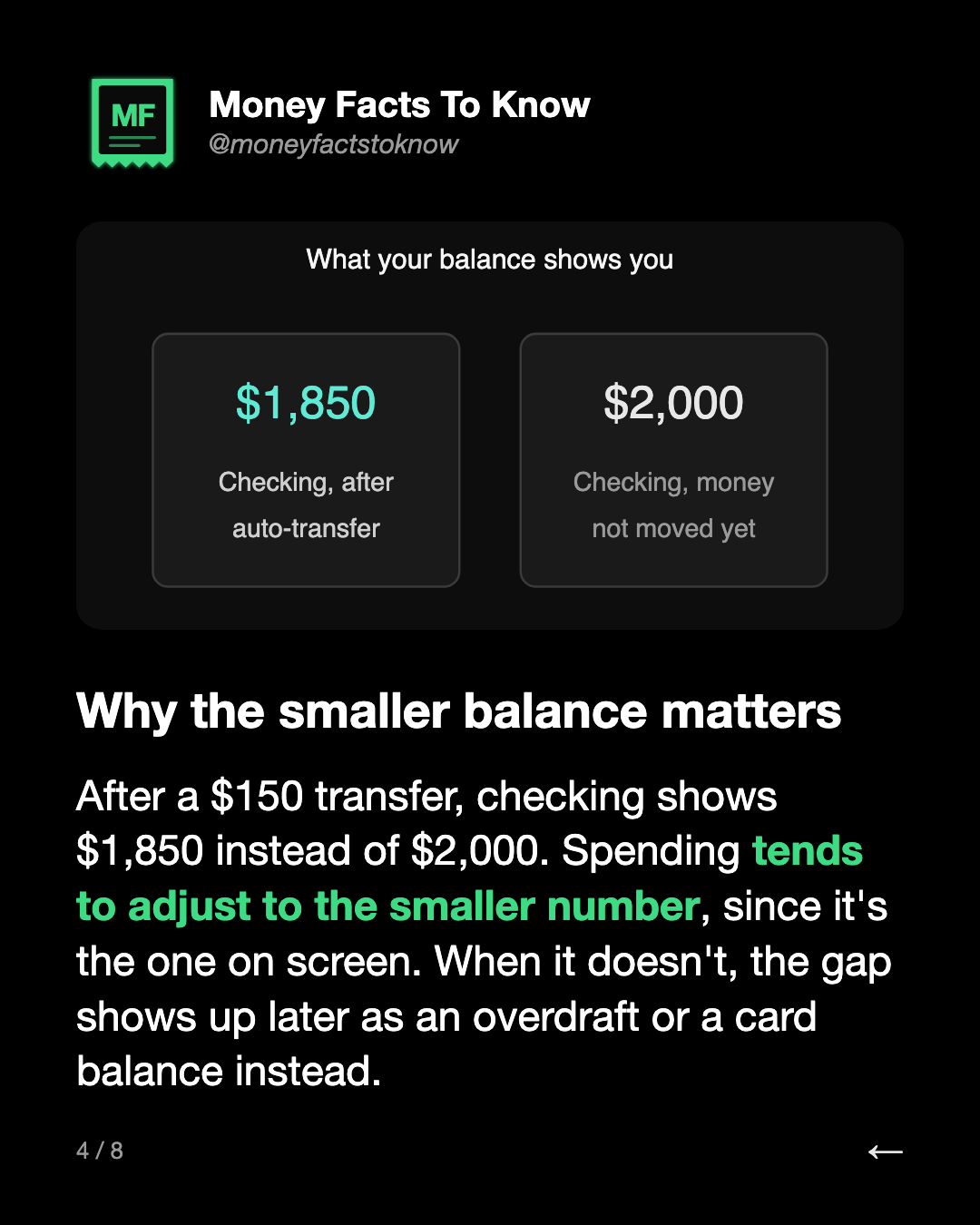
After a $150 transfer, checking shows $1,850 instead of $2,000. Spending tends to adjust to the smaller number, since it's the one on screen. When it doesn't, the gap shows up later as an overdraft or a card balance instead.
The math over a year
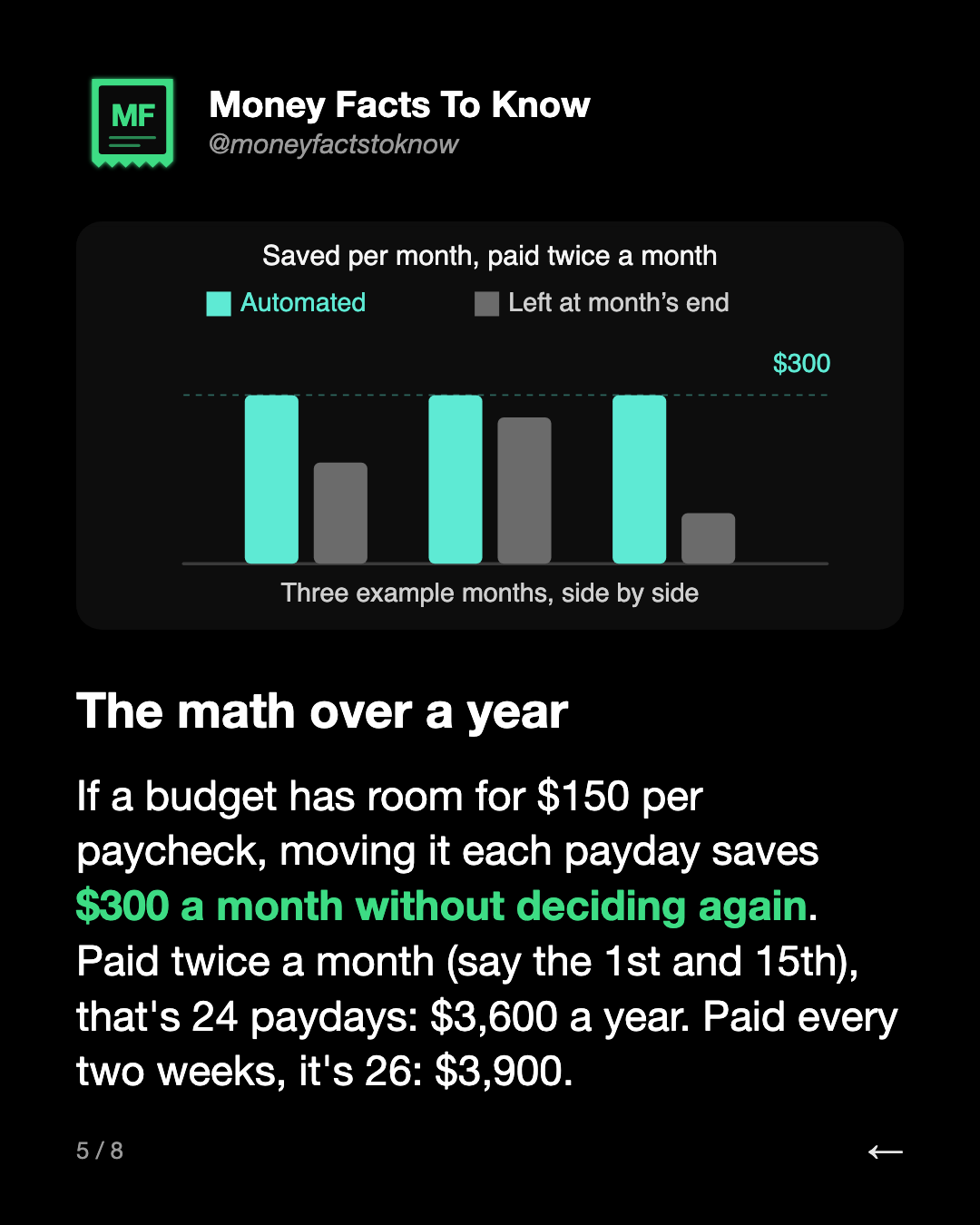
If a budget has room for $150 per paycheck, moving it each payday saves $300 a month without deciding again. Paid twice a month (say the 1st and 15th), that's 24 paydays: $3,600 a year. Paid every two weeks, it's 26: $3,900.
When a transfer can overdraw
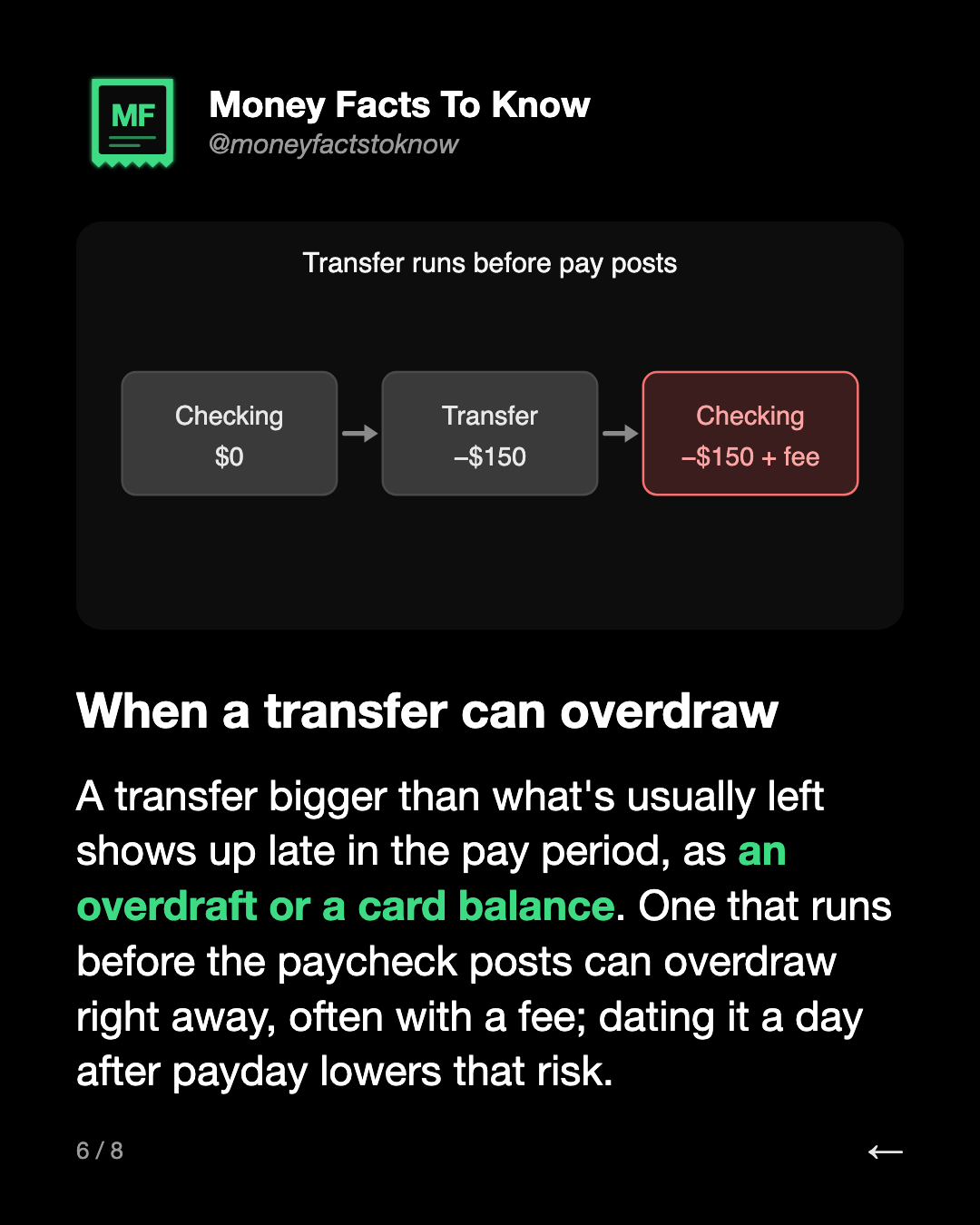
A transfer bigger than what's usually left shows up late in the pay period, as an overdraft or a card balance. One that runs before the paycheck posts can overdraw right away, often with a fee; dating it a day after payday lowers that risk.
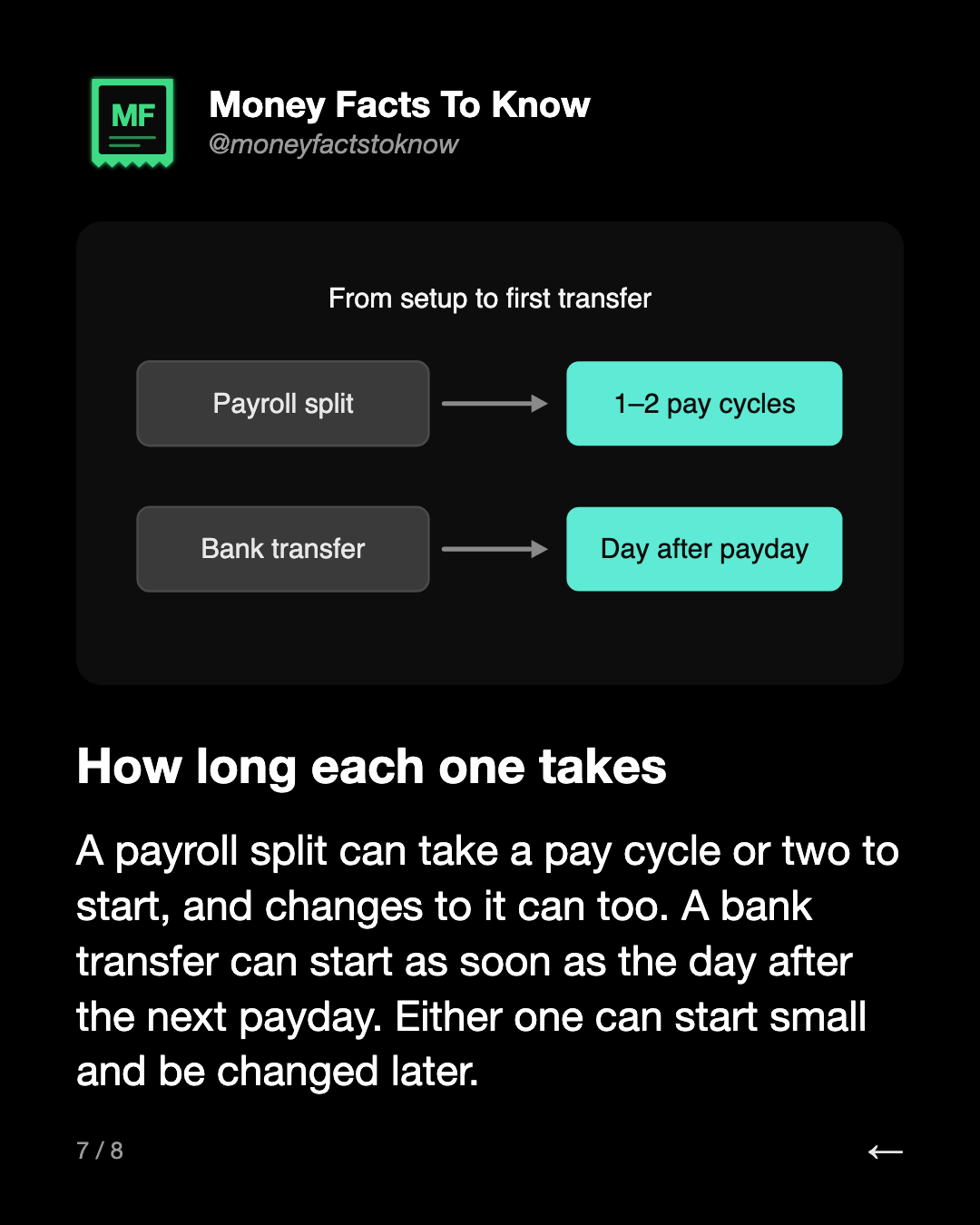
How long each one takes
A payroll split can take a pay cycle or two to start, and changes to it can too. A bank transfer can start as soon as the day after the next payday. Either one can start small and be changed later.