
Money Facts To Know
← All posts

Your savings account shows two interest rates. Here's why the APY is usually the bigger one.
· View on Instagram · View on Facebook

Your savings account shows two interest rates. Here's why the APY is usually the bigger one.
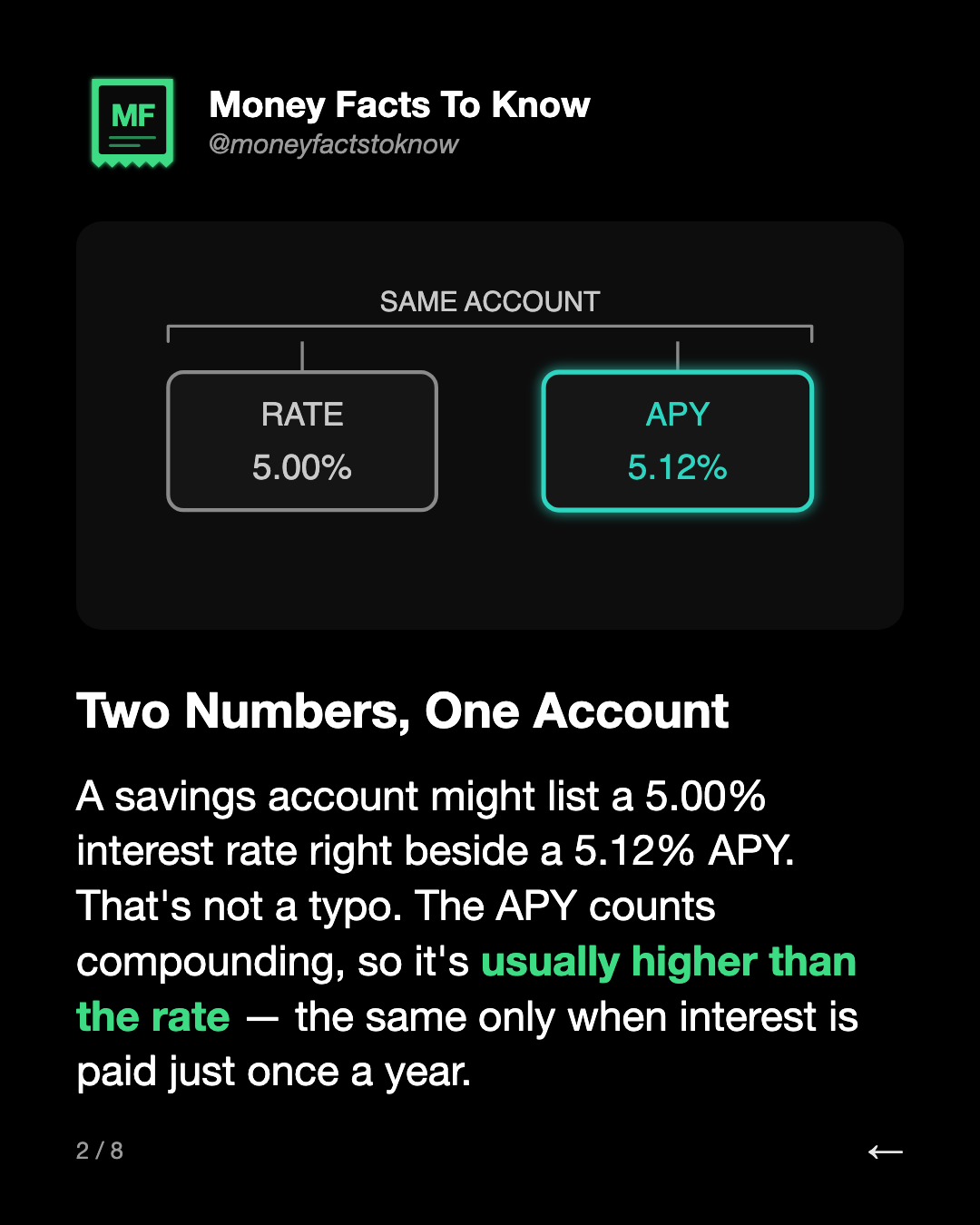
Two Numbers, One Account. A savings account might list a 5.00% interest rate right beside a 5.12% APY. That's not a typo. The APY counts compounding, so it's usually higher than the rate — the same only when interest is paid just once a year.
Two Numbers, One Account

A savings account might list a 5.00% interest rate right beside a 5.12% APY. That's not a typo. The APY counts compounding, so it's usually higher than the rate — the same only when interest is paid just once a year.

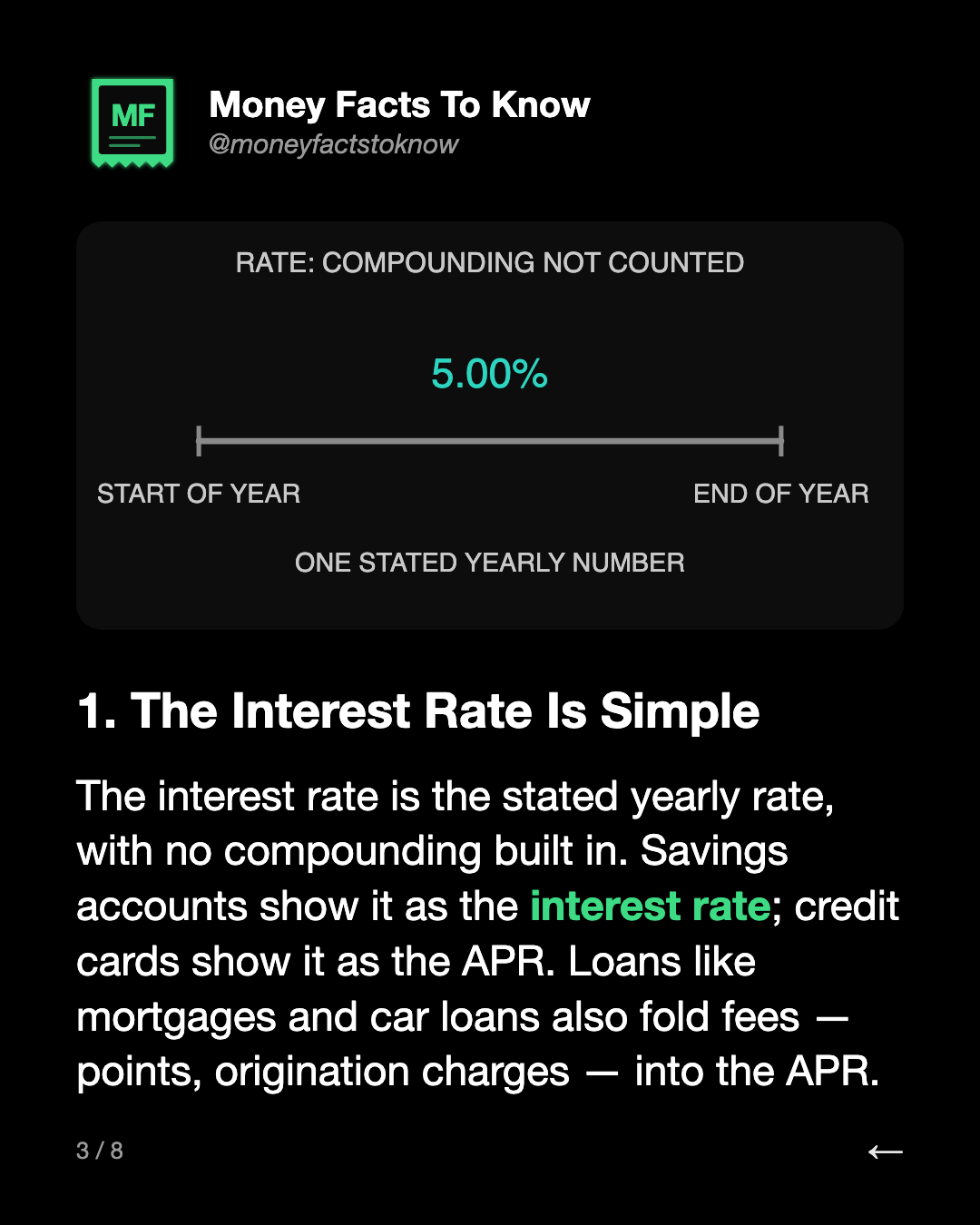
1. The Interest Rate Is Simple. The interest rate is the stated yearly rate, with no compounding built in. Savings accounts show it as the interest rate; credit cards show it as the APR. Loans like mortgages and car loans also fold fees — points, origination charges — into the APR.
1. The Interest Rate Is Simple

The interest rate is the stated yearly rate, with no compounding built in. Savings accounts show it as the interest rate; credit cards show it as the APR. Loans like mortgages and car loans also fold fees — points, origination charges — into the APR.

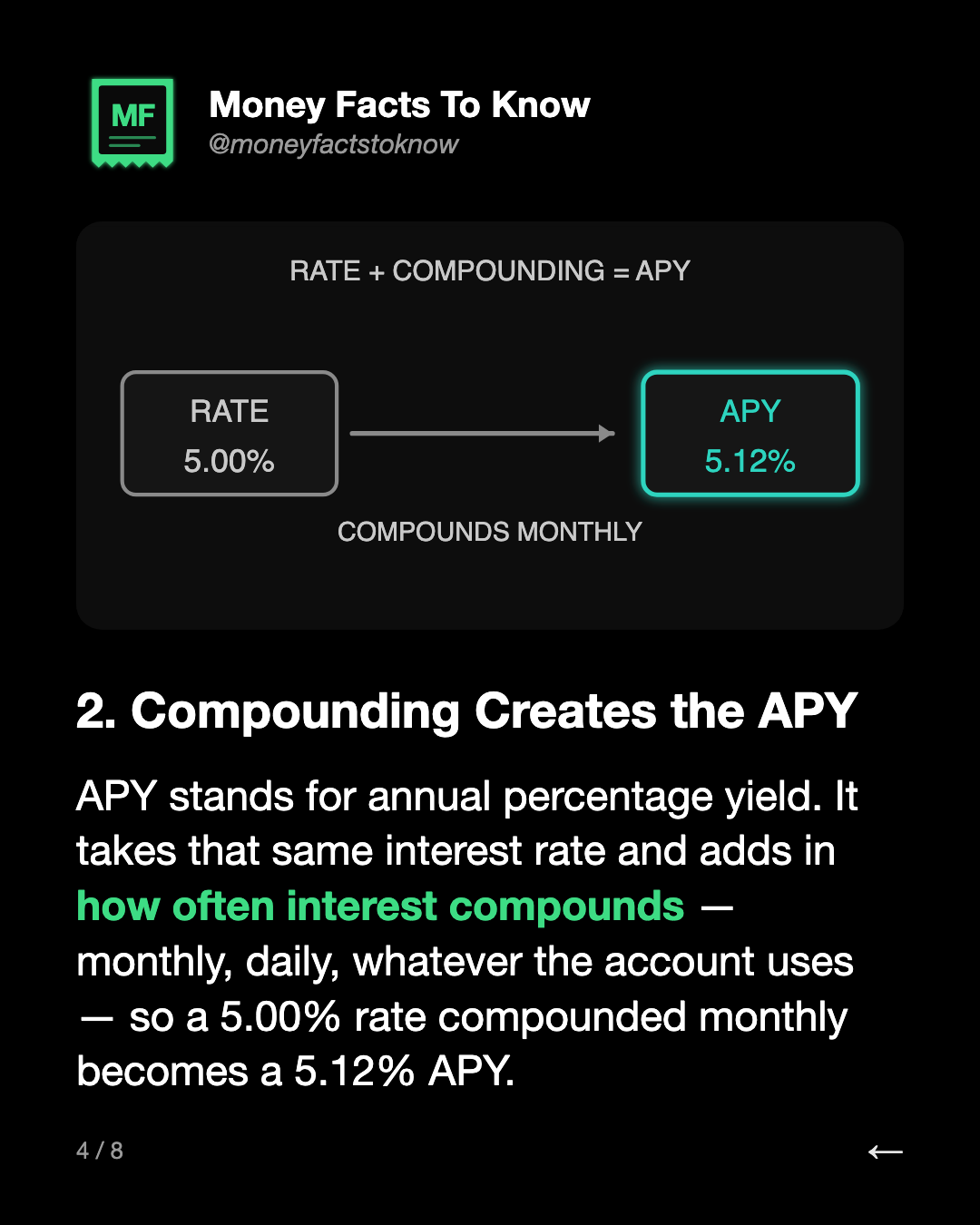
2. Compounding Creates the APY. APY stands for annual percentage yield. It takes that same interest rate and adds in how often interest compounds — monthly, daily, whatever the account uses — so a 5.00% rate compounded monthly becomes a 5.12% APY.
2. Compounding Creates the APY

APY stands for annual percentage yield. It takes that same interest rate and adds in how often interest compounds — monthly, daily, whatever the account uses — so a 5.00% rate compounded monthly becomes a 5.12% APY.

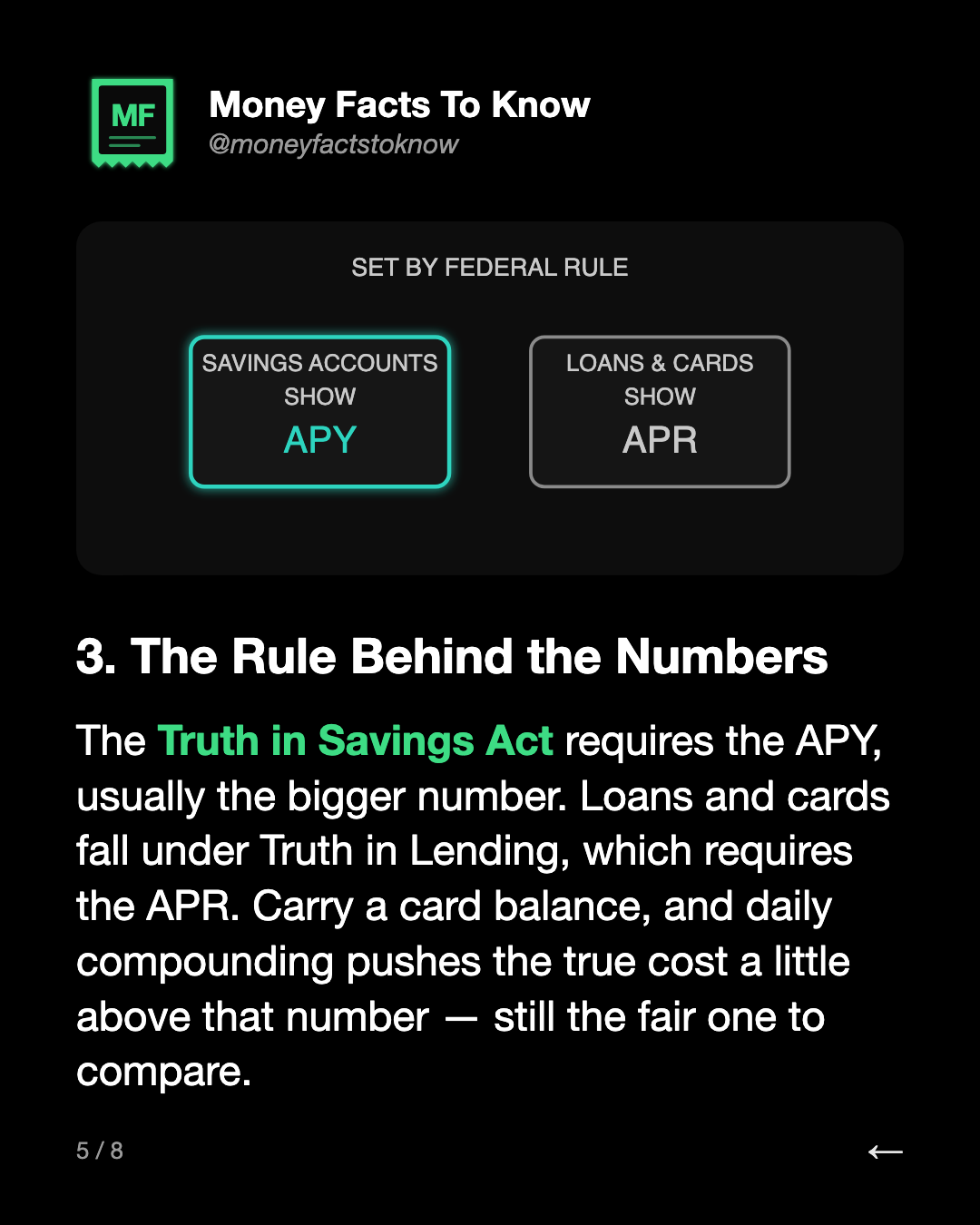
3. The Rule Behind the Numbers. The Truth in Savings Act requires the APY, usually the bigger number. Loans and cards fall under Truth in Lending, which requires the APR. Carry a card balance, and daily compounding pushes the true cost a little above that number — still the fair one to compare.
3. The Rule Behind the Numbers

The Truth in Savings Act requires the APY, usually the bigger number. Loans and cards fall under Truth in Lending, which requires the APR. Carry a card balance, and daily compounding pushes the true cost a little above that number — still the fair one to compare.

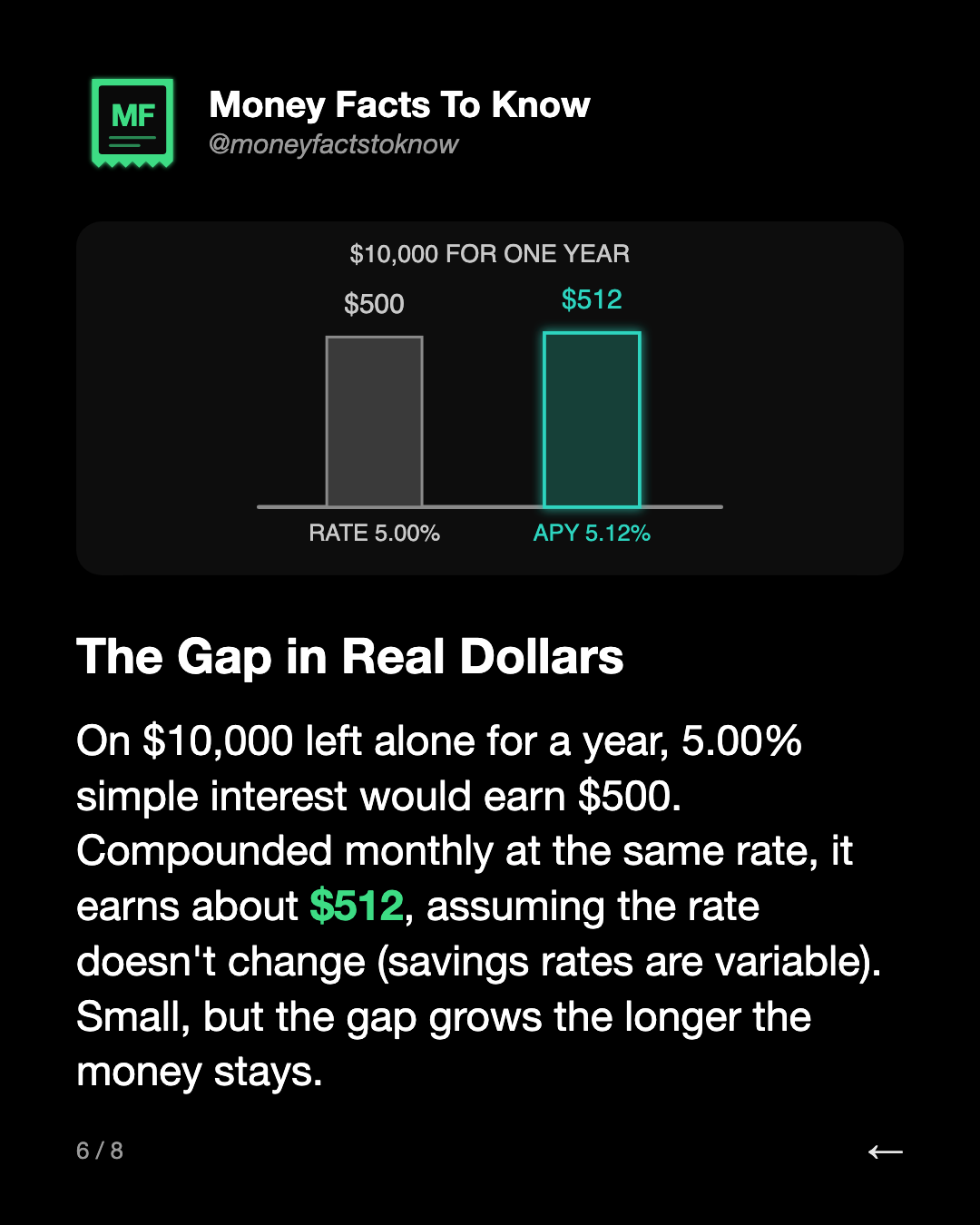
The Gap in Real Dollars. On $10,000 left alone for a year, 5.00% simple interest would earn $500. Compounded monthly at the same rate, it earns about $512, assuming the rate doesn't change (savings rates are variable). Small, but the gap grows the longer the money stays.
The Gap in Real Dollars

On $10,000 left alone for a year, 5.00% simple interest would earn $500. Compounded monthly at the same rate, it earns about $512, assuming the rate doesn't change (savings rates are variable). Small, but the gap grows the longer the money stays.

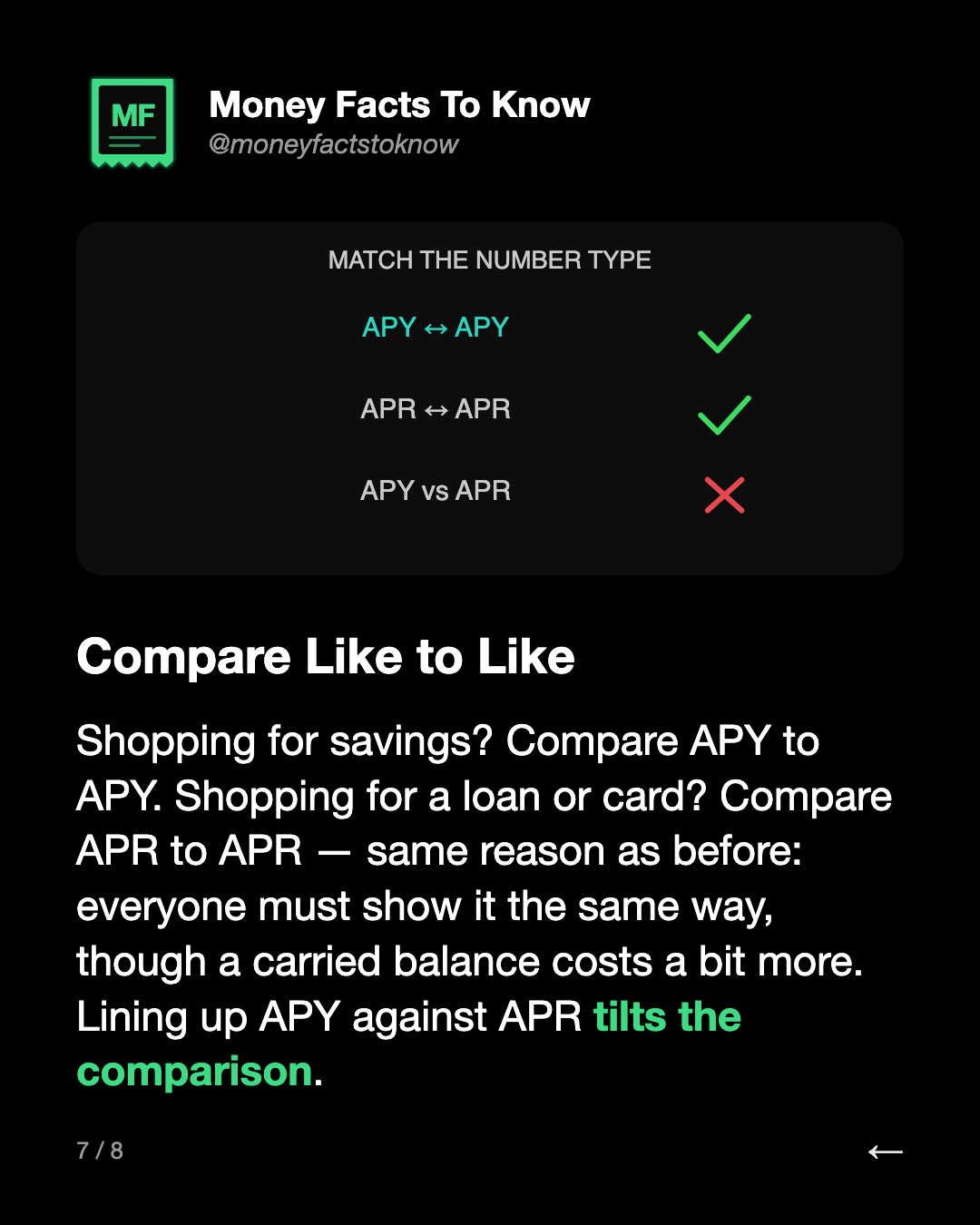
Compare Like to Like. Shopping for savings? Compare APY to APY. Shopping for a loan or card? Compare APR to APR — same reason as before: everyone must show it the same way, though a carried balance costs a bit more. Lining up APY against APR tilts the comparison.


Compare Like to Like

Shopping for savings? Compare APY to APY. Shopping for a loan or card? Compare APR to APR — same reason as before: everyone must show it the same way, though a carried balance costs a bit more. Lining up APY against APR tilts the comparison.

Follow @moneyfactstoknowSave this post on Instagram

More posts