 Money Facts To Know
The W-4 has 5 steps. One job, no working spouse, no dependents? You may only need 2.

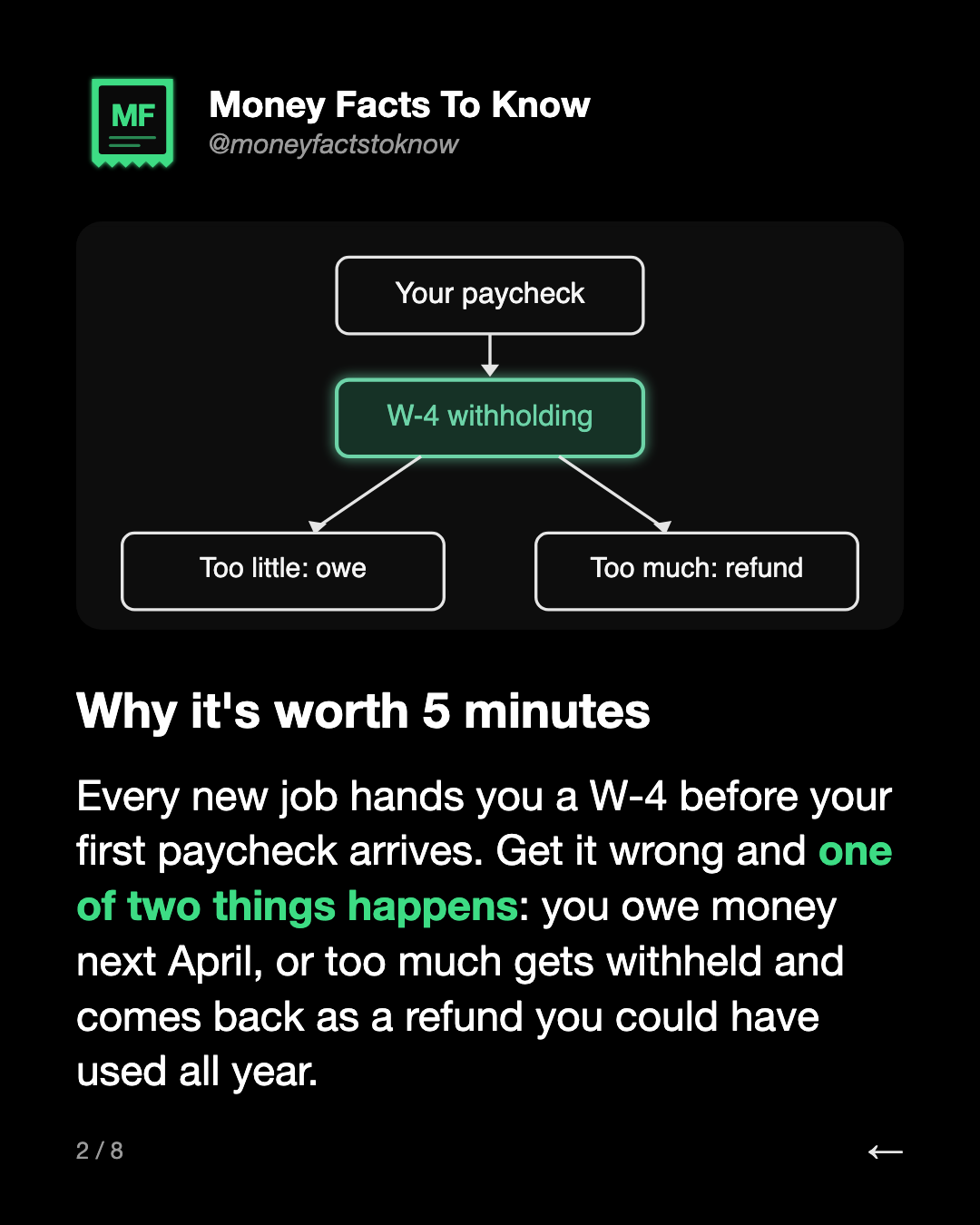
Why it's worth 5 minutes
Every new job hands you a W-4 before your first paycheck arrives. Get it wrong and one of two things happens: you owe money next April, or too much gets withheld and comes back as a refund you could have used all year.
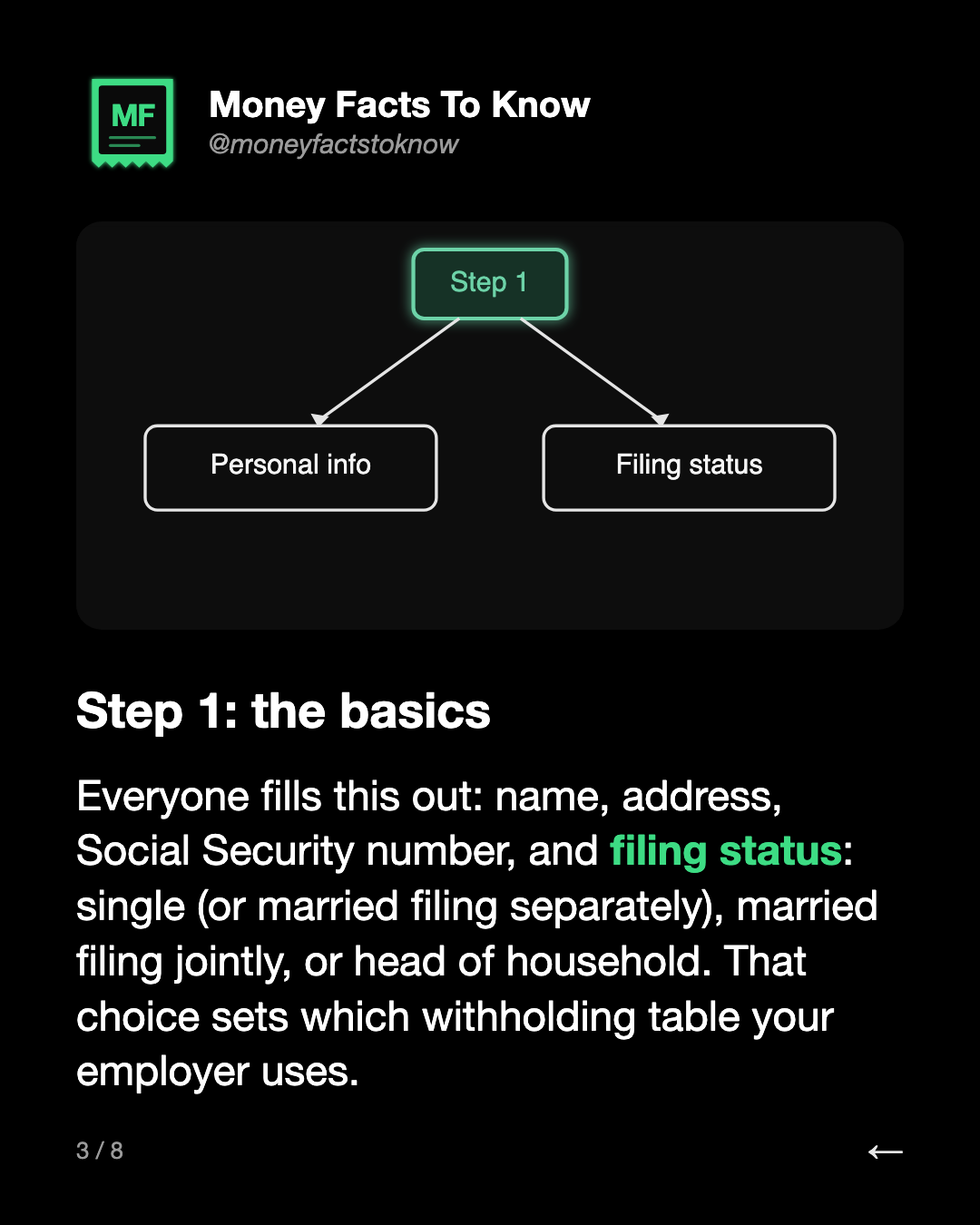
Step 1: the basics
Everyone fills this out: name, address, Social Security number, and filing status: single (or married filing separately), married filing jointly, or head of household. That choice sets which withholding table your employer uses.
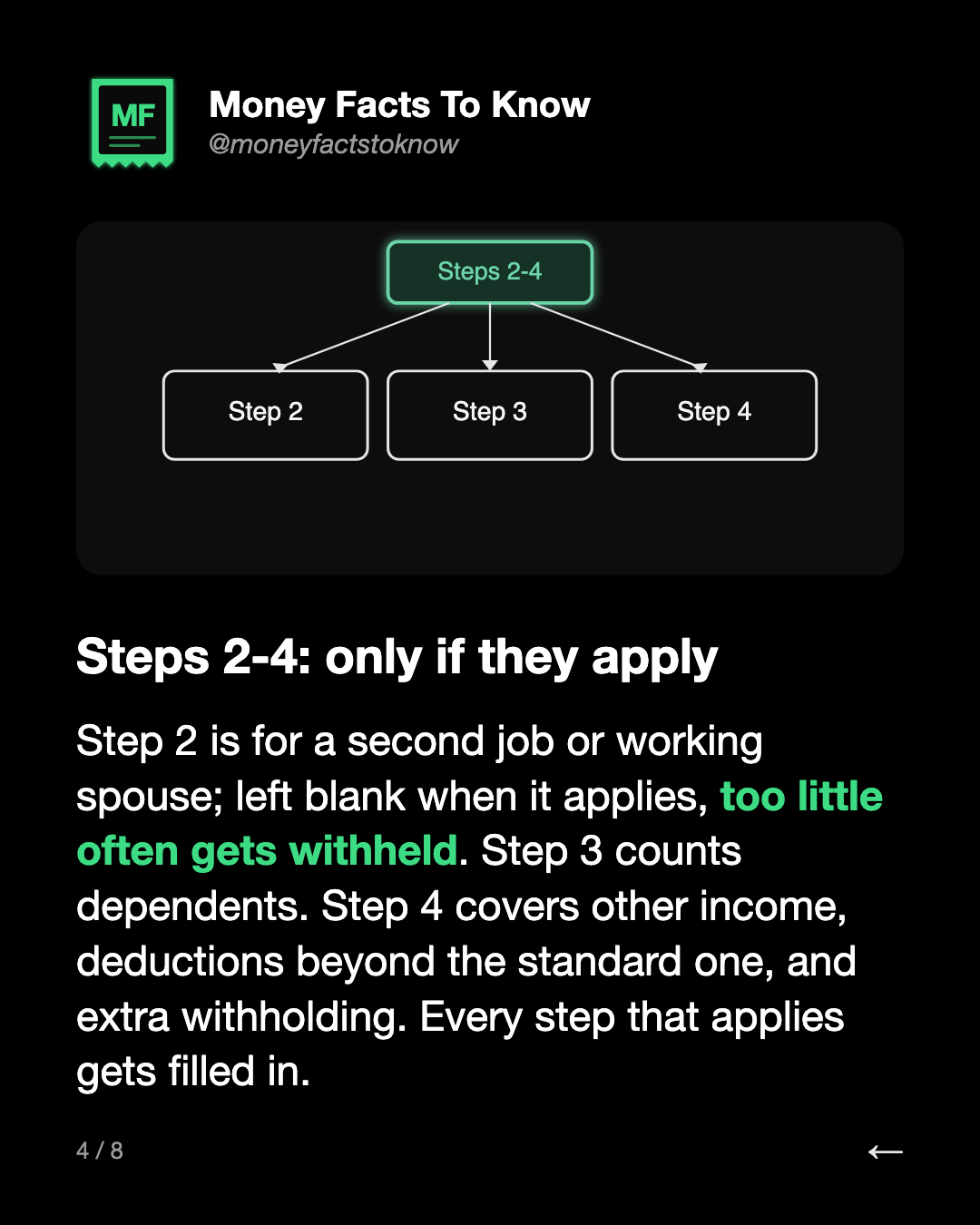
Steps 2-4: only if they apply
Step 2 is for a second job or working spouse; left blank when it applies, too little often gets withheld. Step 3 counts dependents. Step 4 covers other income, deductions beyond the standard one, and extra withholding. Every step that applies gets filled in.
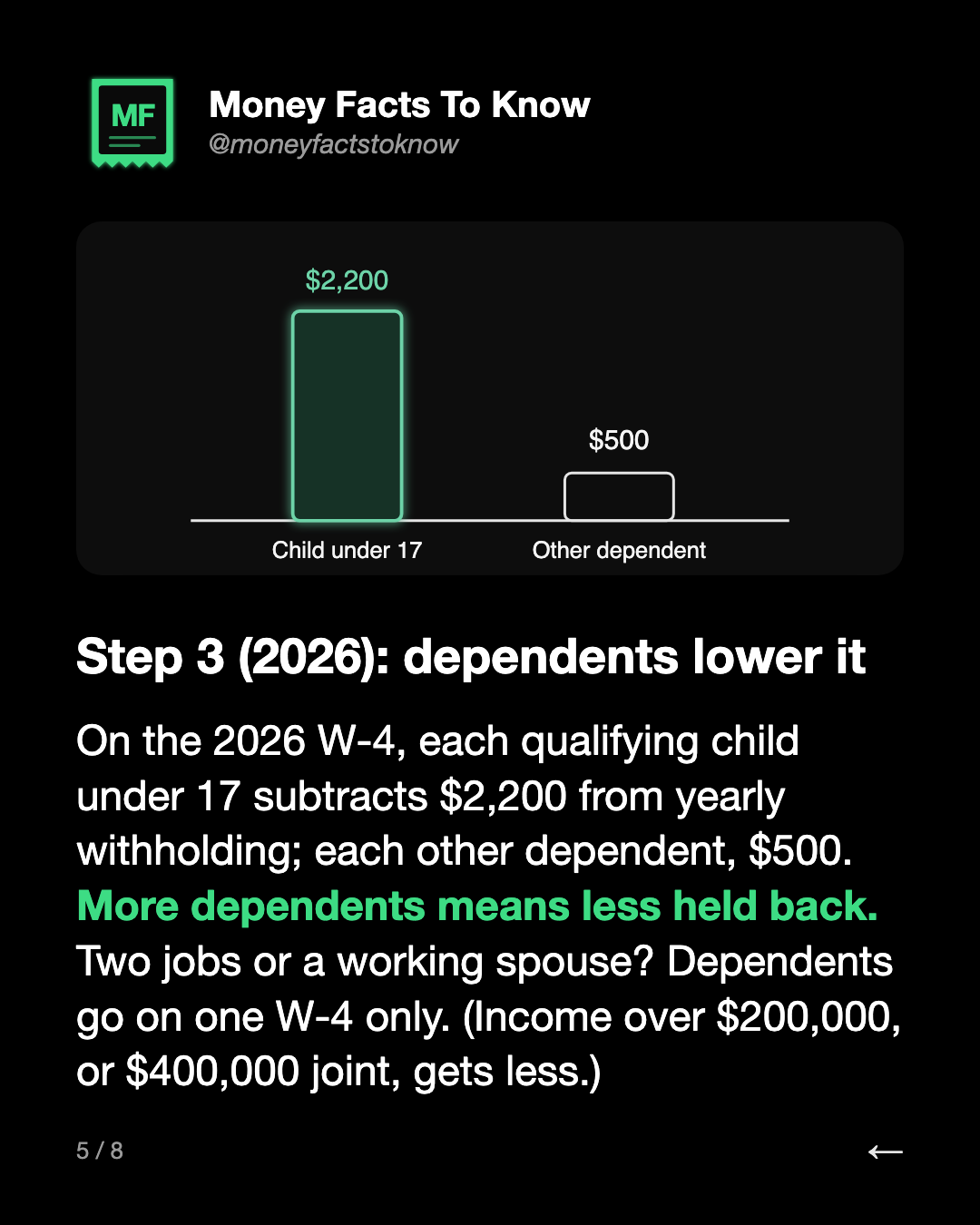
Step 3 (2026): dependents lower it
On the 2026 W-4, each qualifying child under 17 subtracts $2,200 from yearly withholding; each other dependent, $500. More dependents means less held back. Two jobs or a working spouse? Dependents go on one W-4 only. (Income over $200,000, or $400,000 joint, gets less.)
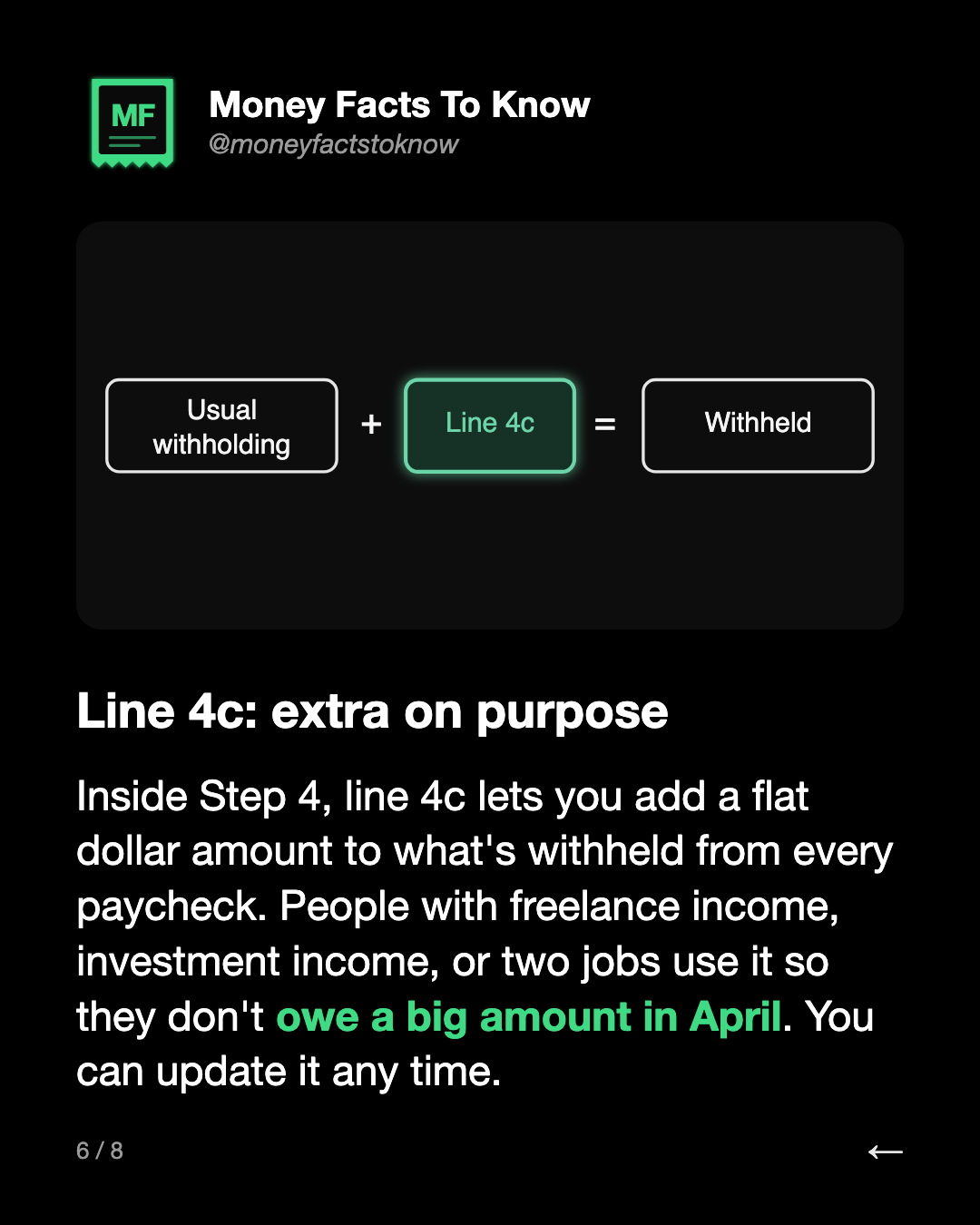
Line 4c: extra on purpose
Inside Step 4, line 4c lets you add a flat dollar amount to what's withheld from every paycheck. People with freelance income, investment income, or two jobs use it so they don't owe a big amount in April. You can update it any time.
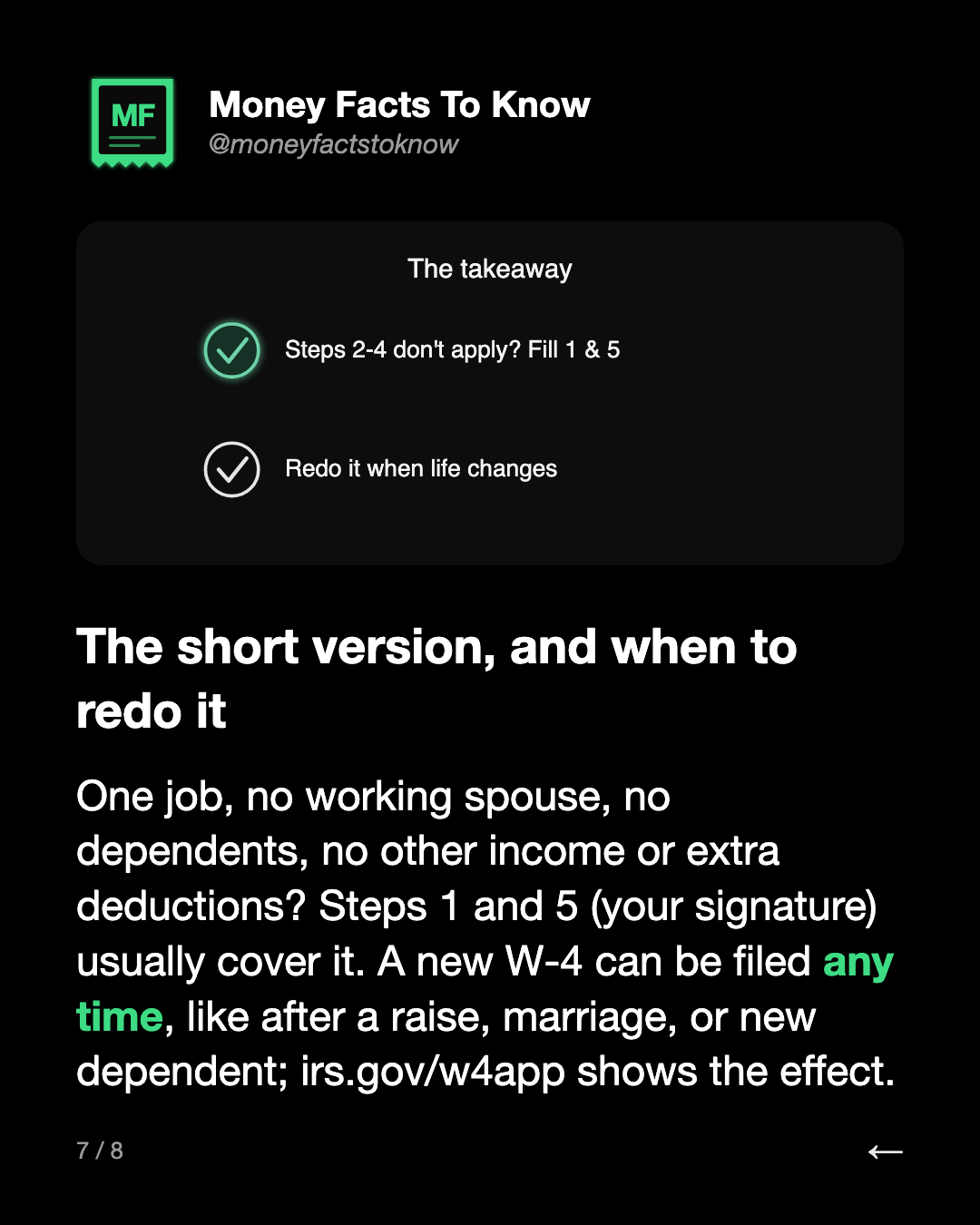
The short version, and when to redo it
One job, no working spouse, no dependents, no other income or extra deductions? Steps 1 and 5 (your signature) usually cover it. A new W-4 can be filed any time, like after a raise, marriage, or new dependent; irs.gov/w4app shows the effect.