 Money Facts To Know
Carrying a credit card balance does not build your credit score
The Myth
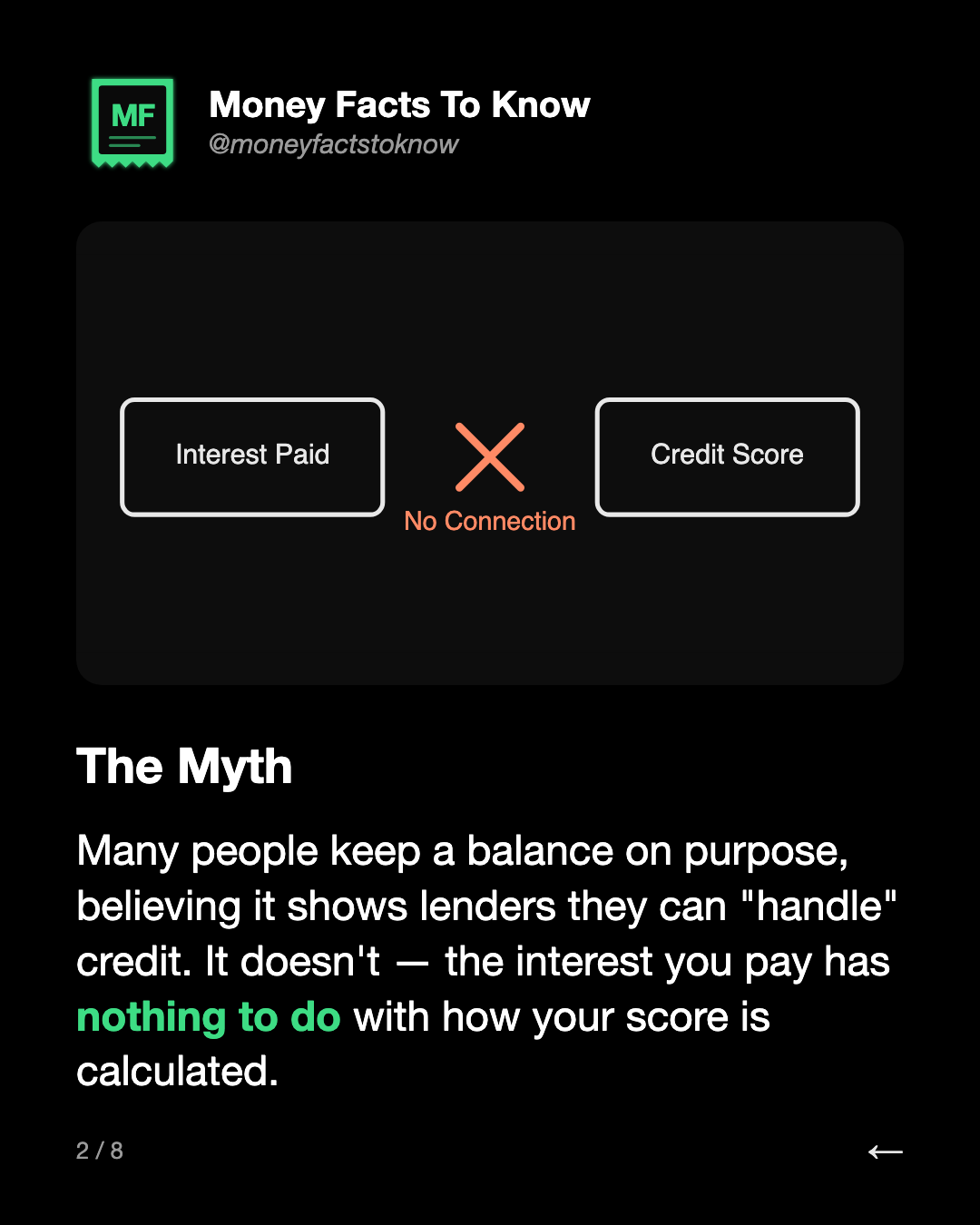
Many people keep a balance on purpose, believing it shows lenders they can "handle" credit. It doesn't — the interest you pay has nothing to do with how your score is calculated.
What Actually Counts
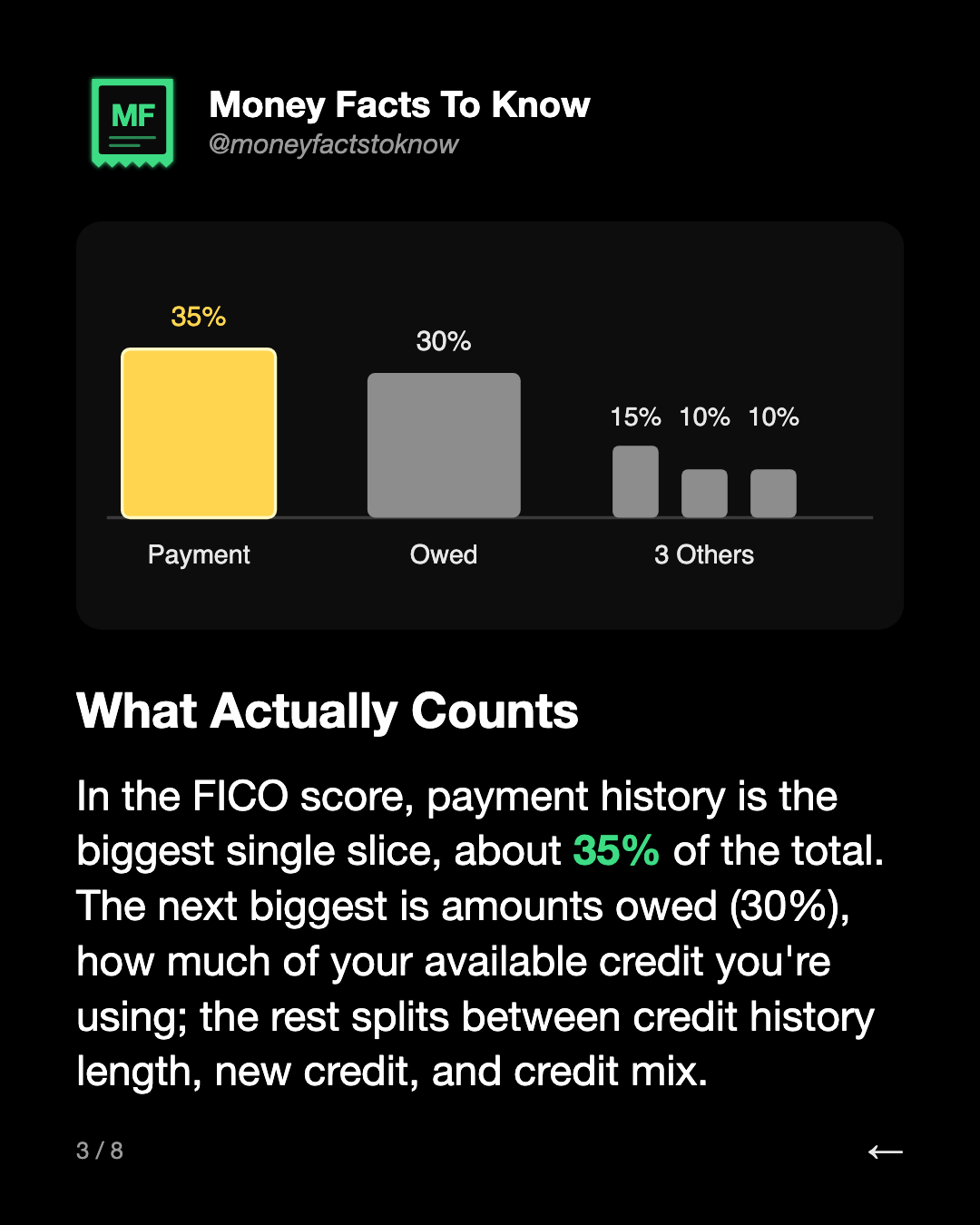
In the FICO score, payment history is the biggest single slice, about 35% of the total. The next biggest is amounts owed (30%), how much of your available credit you're using; the rest splits between credit history length, new credit, and credit mix.
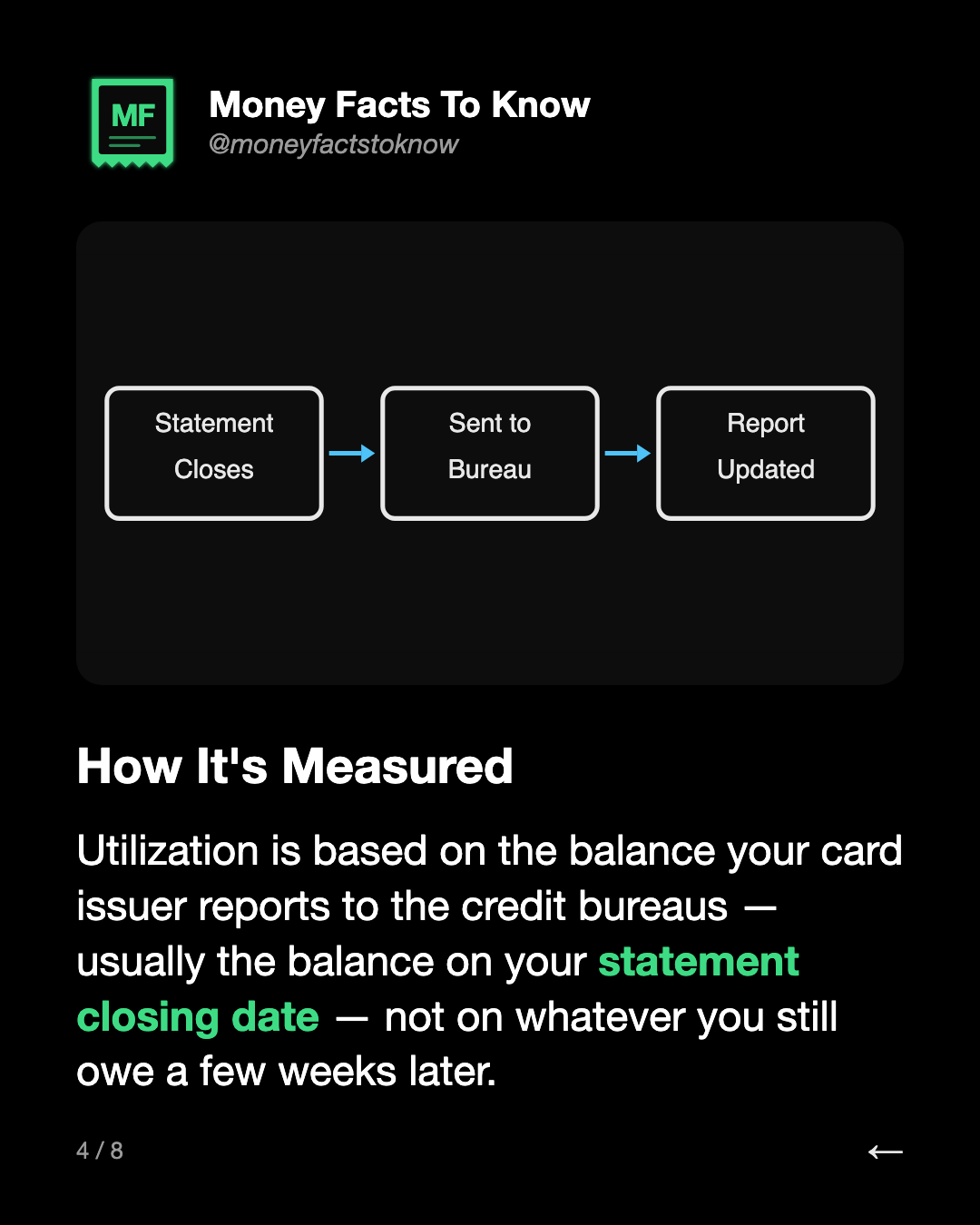
How It's Measured
Utilization is based on the balance your card issuer reports to the credit bureaus — usually the balance on your statement closing date — not on whatever you still owe a few weeks later.
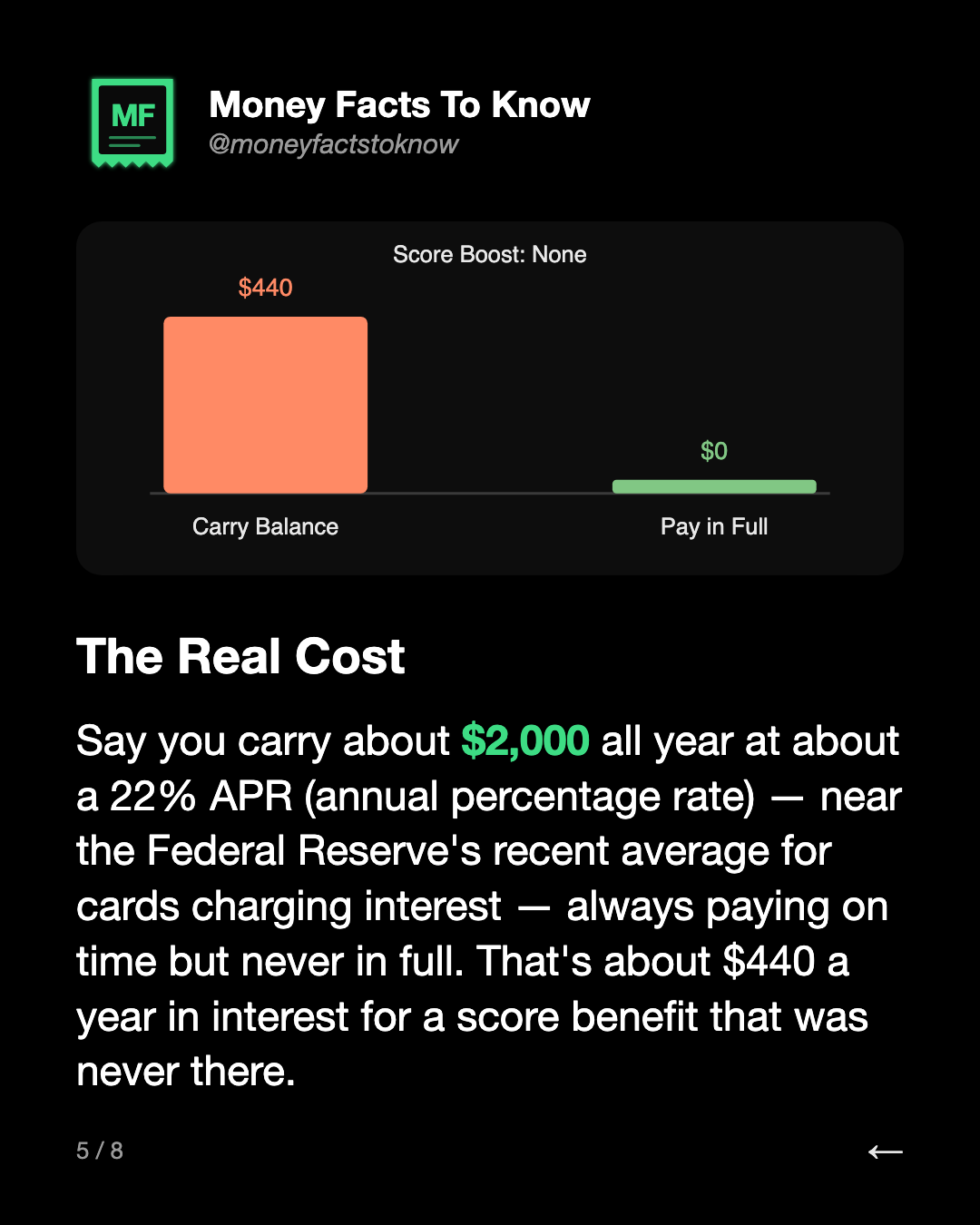
The Real Cost
Say you carry about $2,000 all year at about a 22% APR (annual percentage rate) — near the Federal Reserve's recent average for cards charging interest — always paying on time but never in full. That's about $440 a year in interest for a score benefit that was never there.
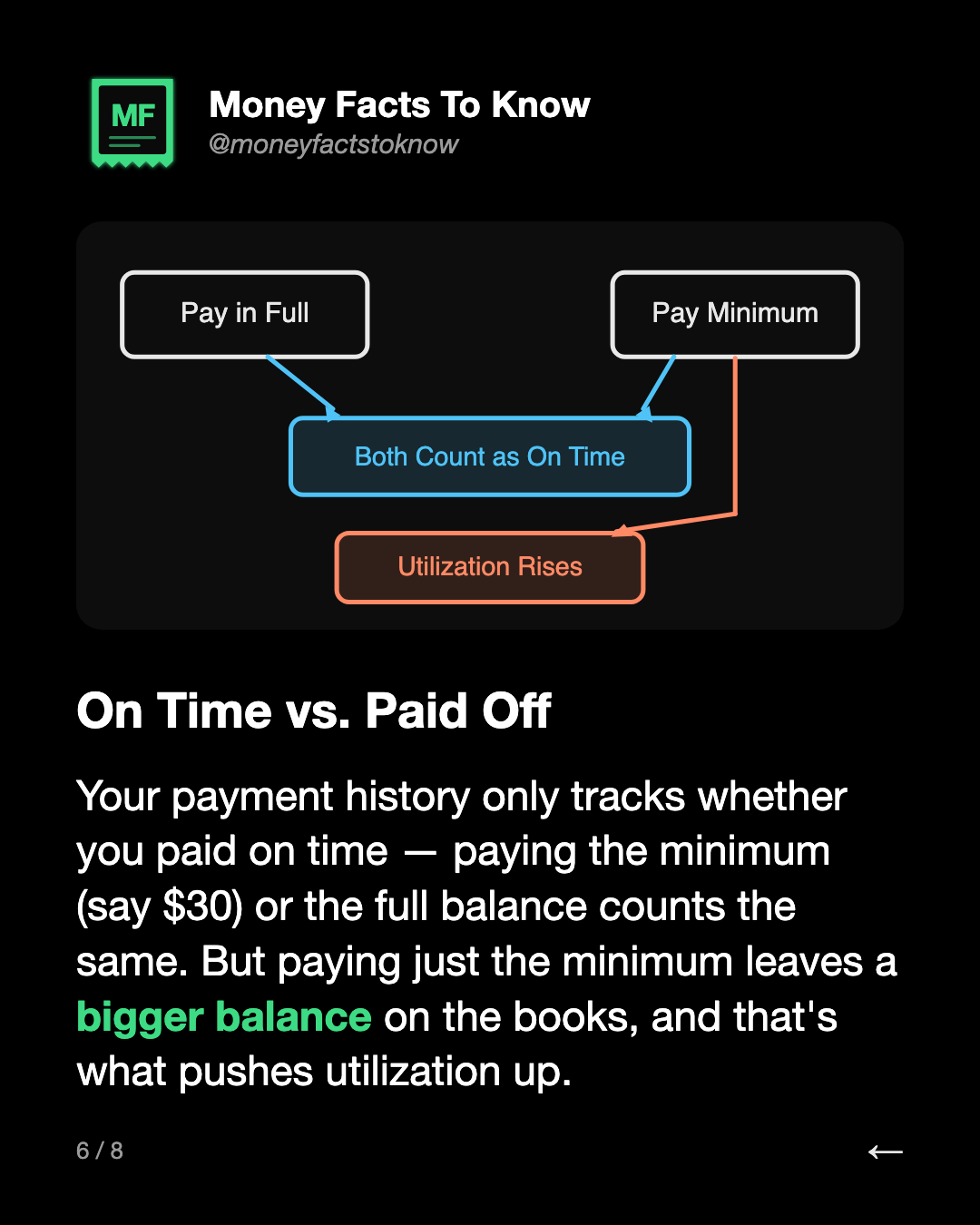
On Time vs. Paid Off
Your payment history only tracks whether you paid on time — paying the minimum (say $30) or the full balance counts the same. But paying just the minimum leaves a bigger balance on the books, and that's what pushes utilization up.
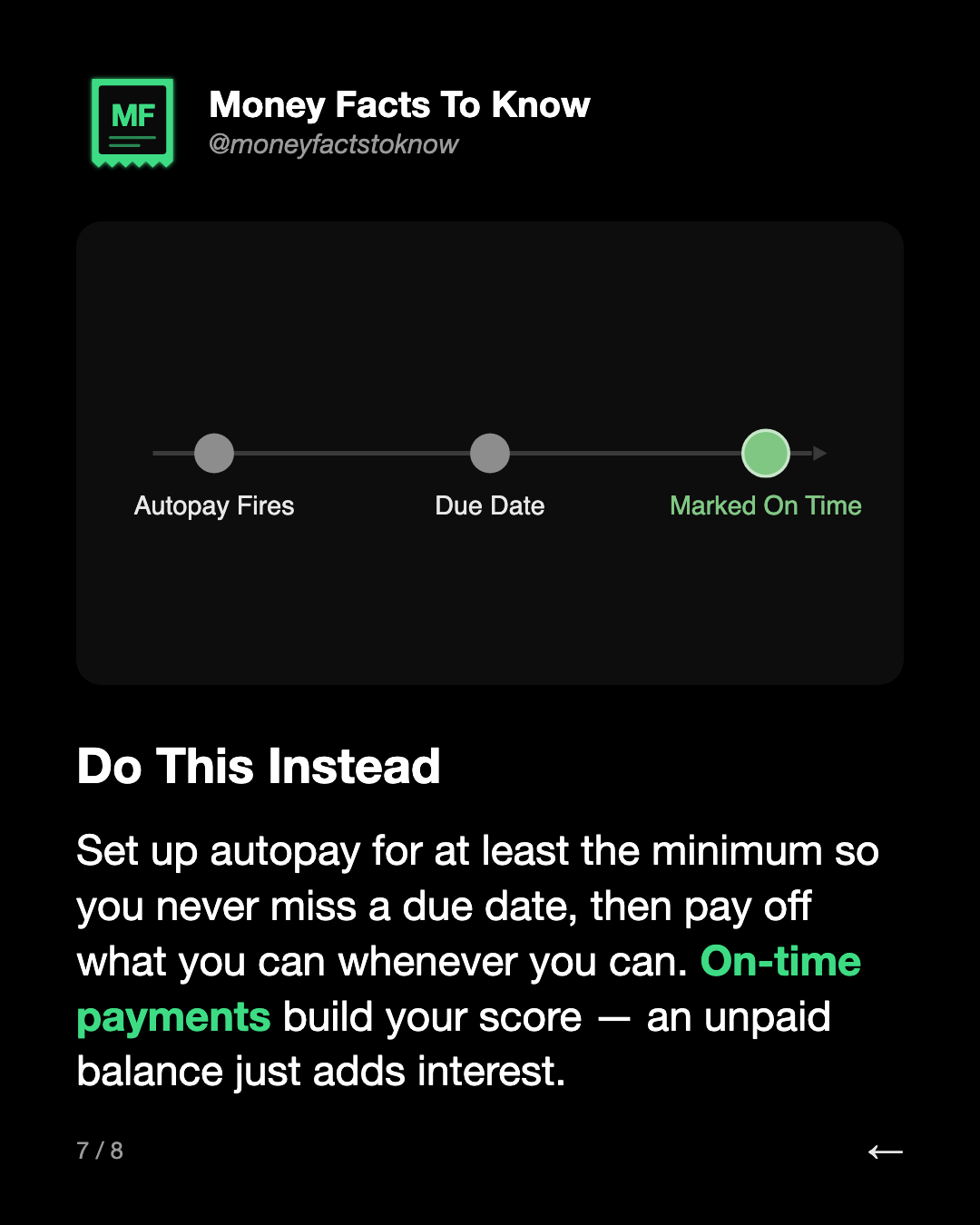
Do This Instead
Set up autopay for at least the minimum so you never miss a due date, then pay off what you can whenever you can. On-time payments build your score — an unpaid balance just adds interest.