 Money Facts To Know
A raise can't shrink your paycheck — even if it bumps your tax bracket
The common fear
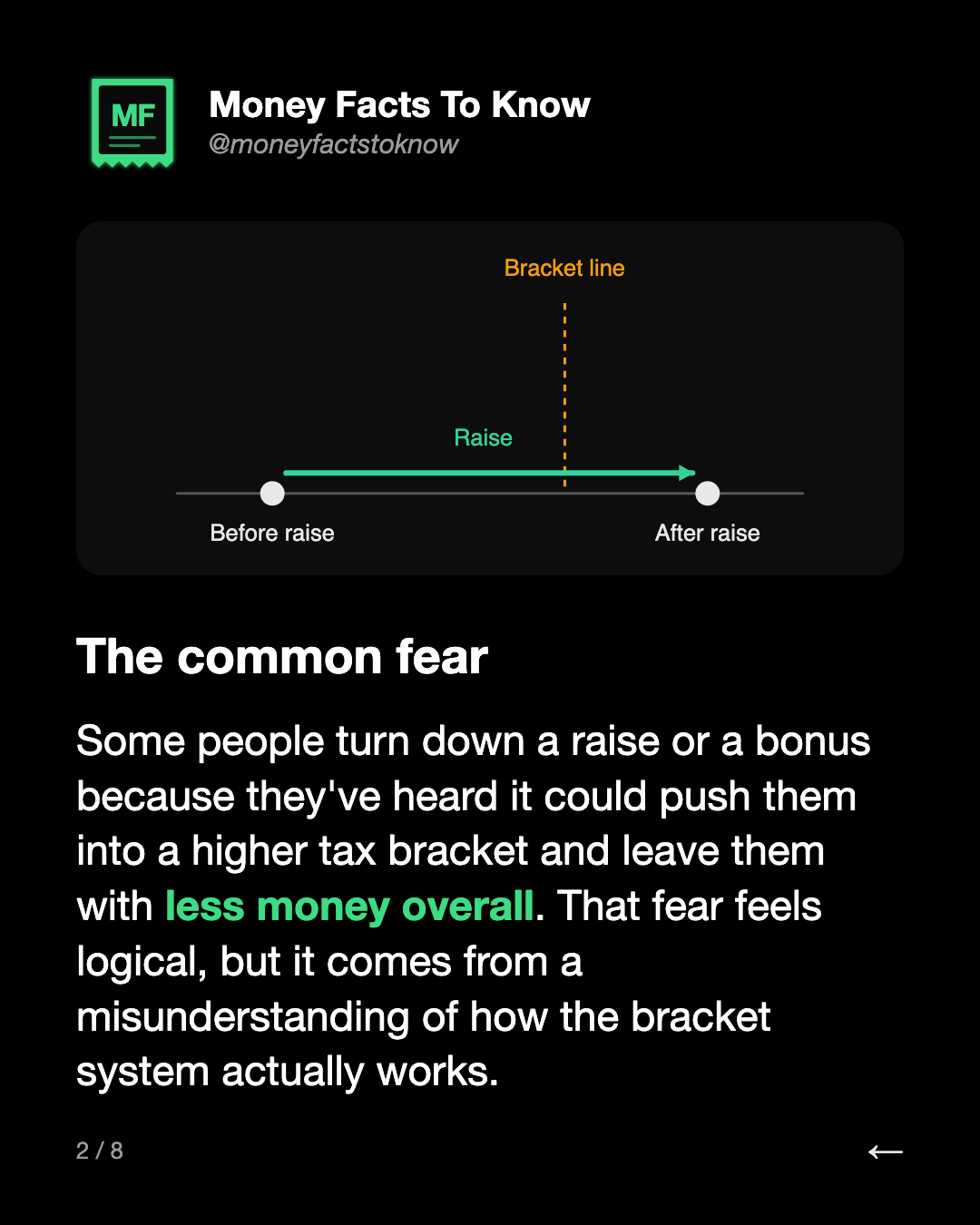
Some people turn down a raise or a bonus because they've heard it could push them into a higher tax bracket and leave them with less money overall. That fear feels logical, but it comes from a misunderstanding of how the bracket system actually works.
How brackets really work
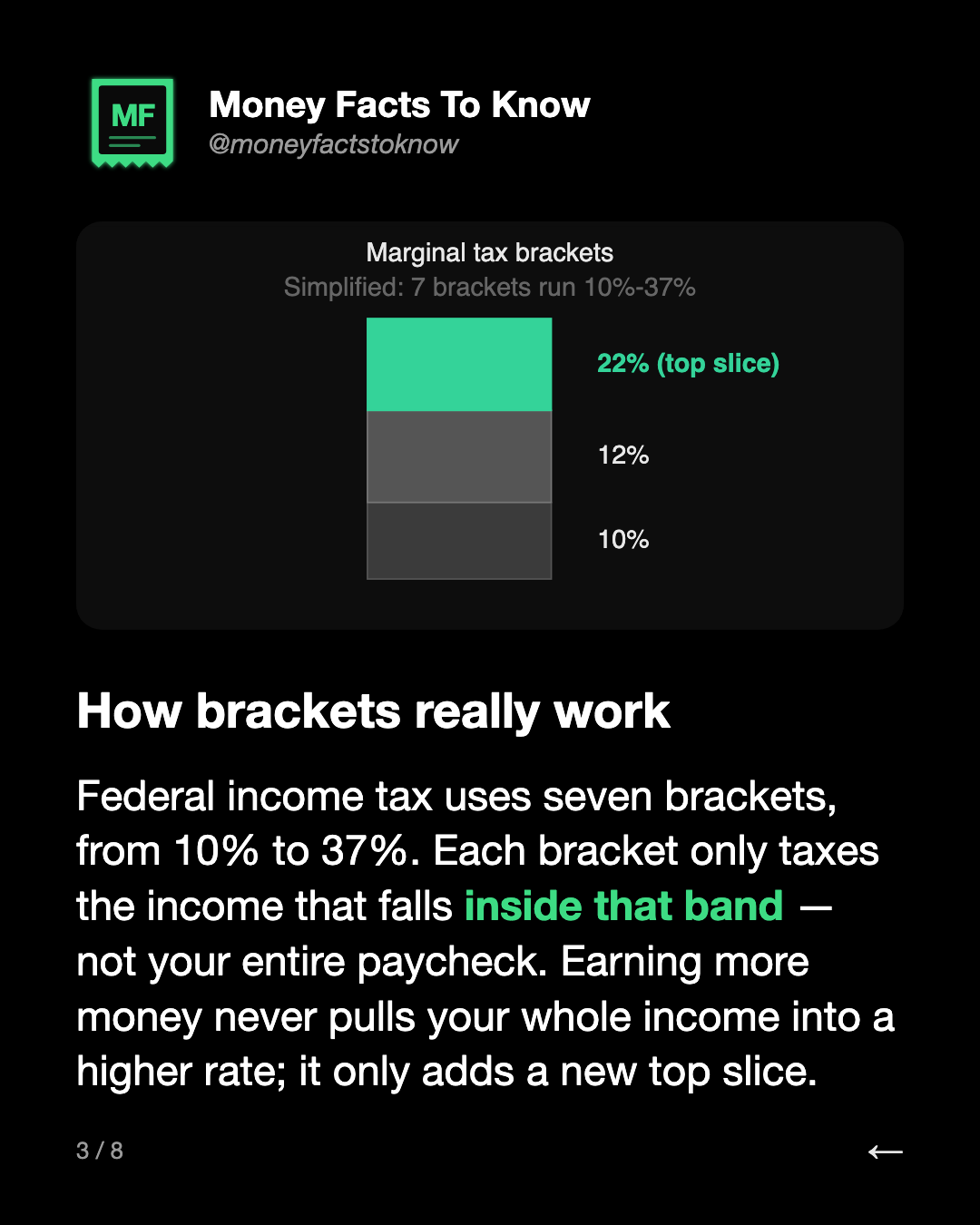
Federal income tax uses seven brackets, from 10% to 37%. Each bracket only taxes the income that falls inside that band — not your entire paycheck. Earning more money never pulls your whole income into a higher rate; it only adds a new top slice.
Say your taxable income is $50,400
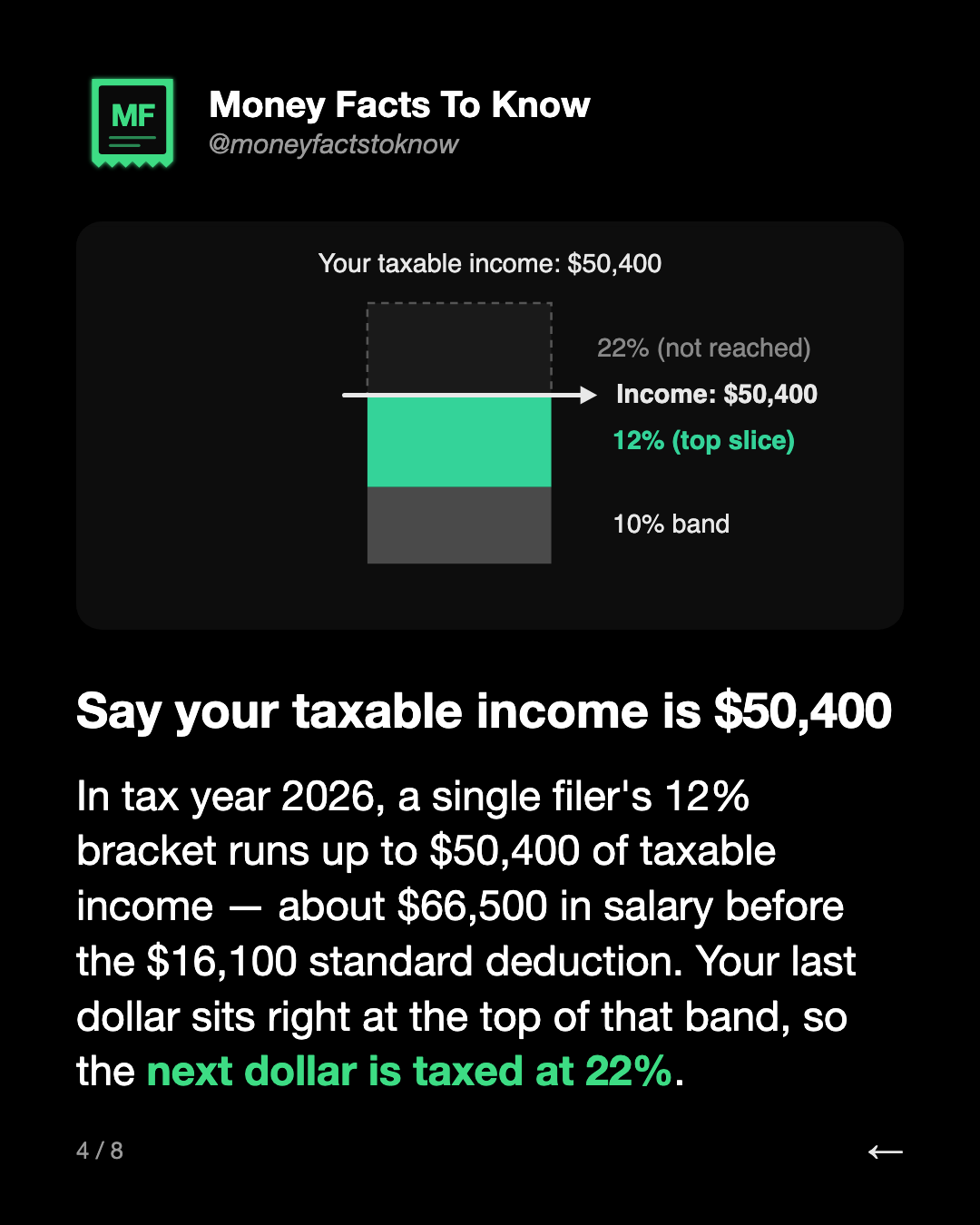
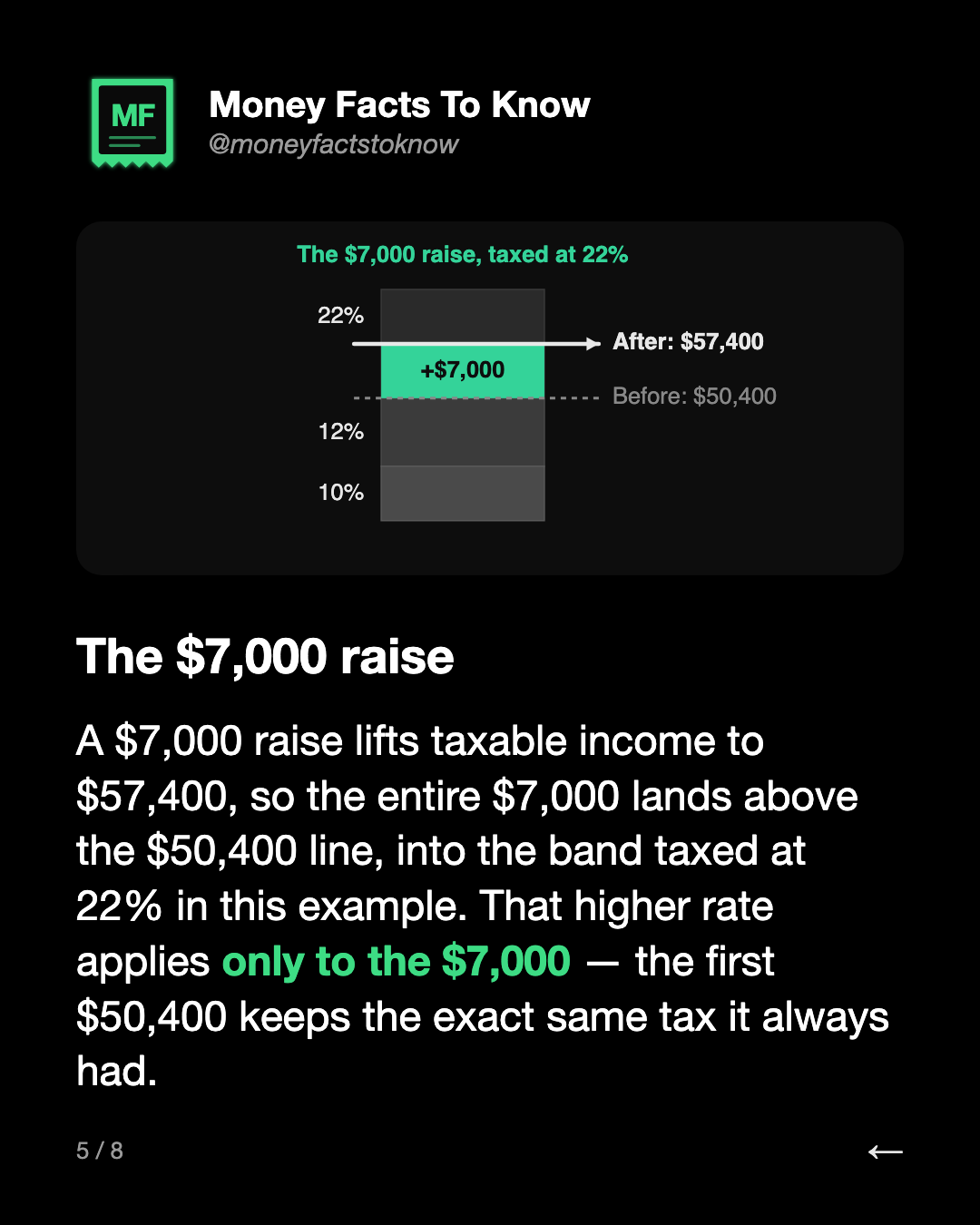
In tax year 2026, a single filer's 12% bracket runs up to $50,400 of taxable income — about $66,500 in salary before the $16,100 standard deduction. Your last dollar sits right at the top of that band, so the next dollar is taxed at 22%.
The $7,000 raise
A $7,000 raise lifts taxable income to $57,400, so the entire $7,000 lands above the $50,400 line, into the band taxed at 22% in this example. That higher rate applies only to the $7,000 — the first $50,400 keeps the exact same tax it always had.
You still keep most of it
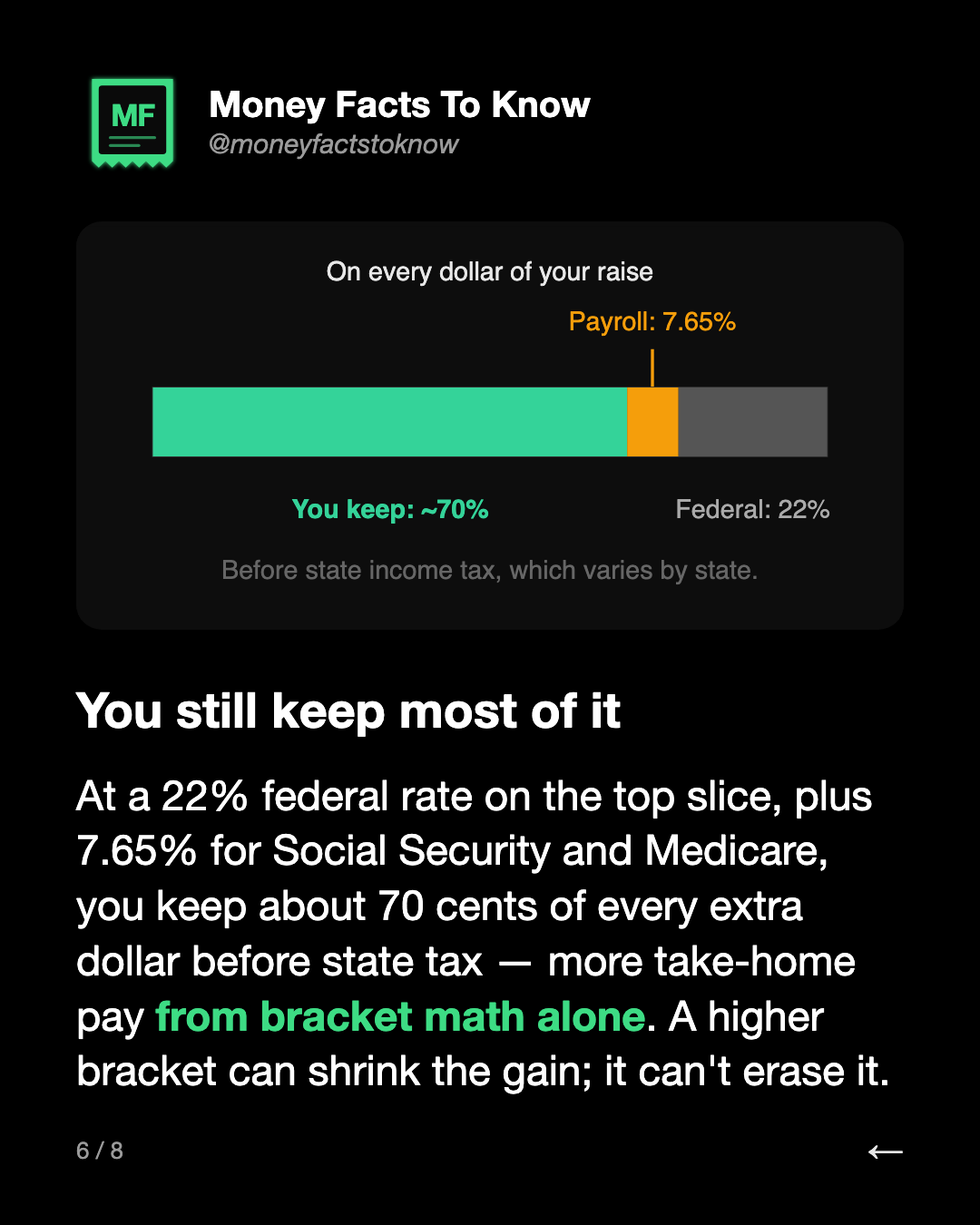
At a 22% federal rate on the top slice, plus 7.65% for Social Security and Medicare, you keep about 70 cents of every extra dollar before state tax — more take-home pay from bracket math alone. A higher bracket can shrink the gain; it can't erase it.
What to do with this
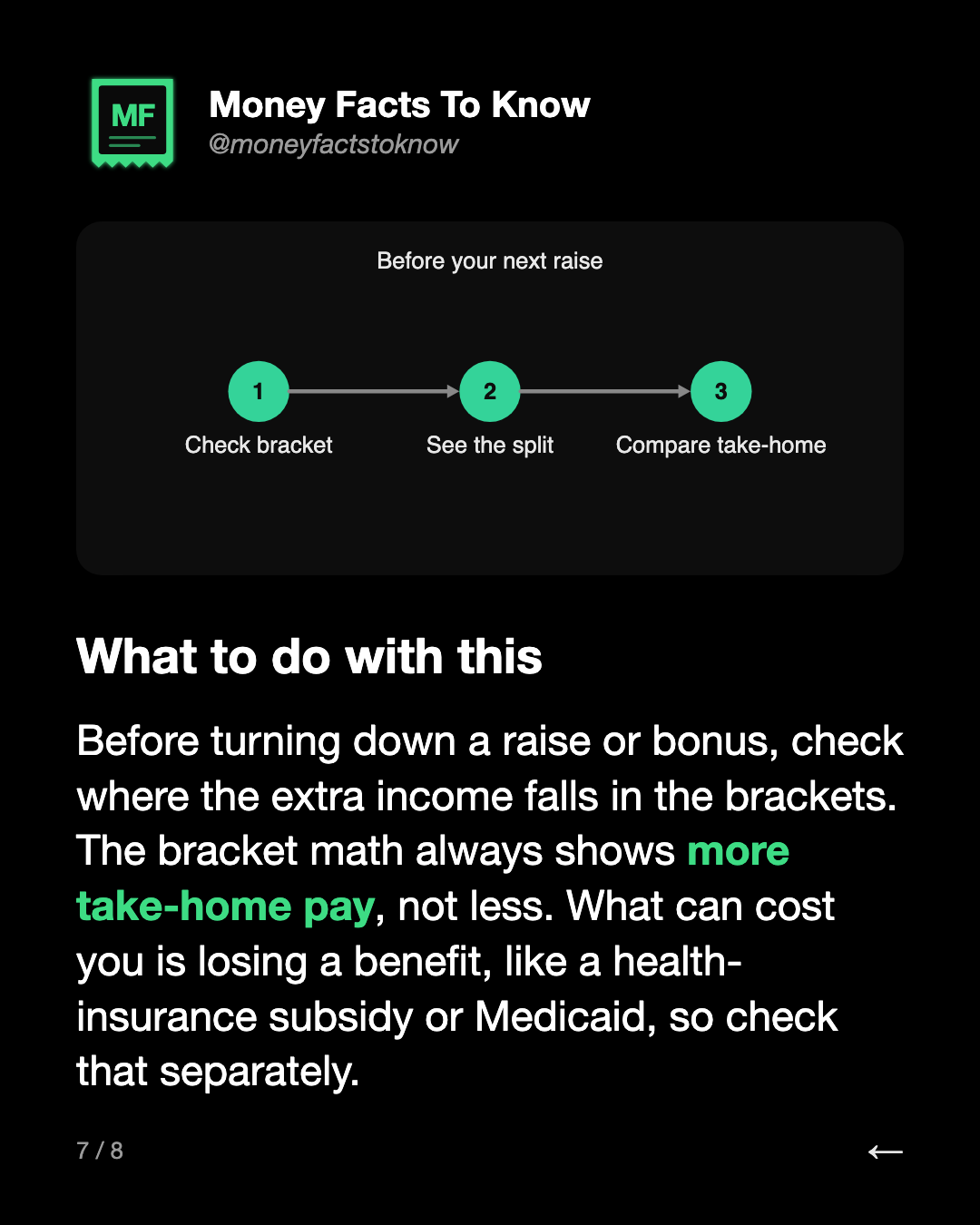
Before turning down a raise or bonus, check where the extra income falls in the brackets. The bracket math always shows more take-home pay, not less. What can cost you is losing a benefit, like a health-insurance subsidy or Medicaid, so check that separately.