
Money Facts To Know
← All posts

At an assumed 7% a year, the same $200 a month grows to about $525,000 for one saver and $244,000 for another
· View on Instagram · View on Facebook

At an assumed 7% a year, the same $200 a month grows to about $525,000 for one saver and $244,000 for another
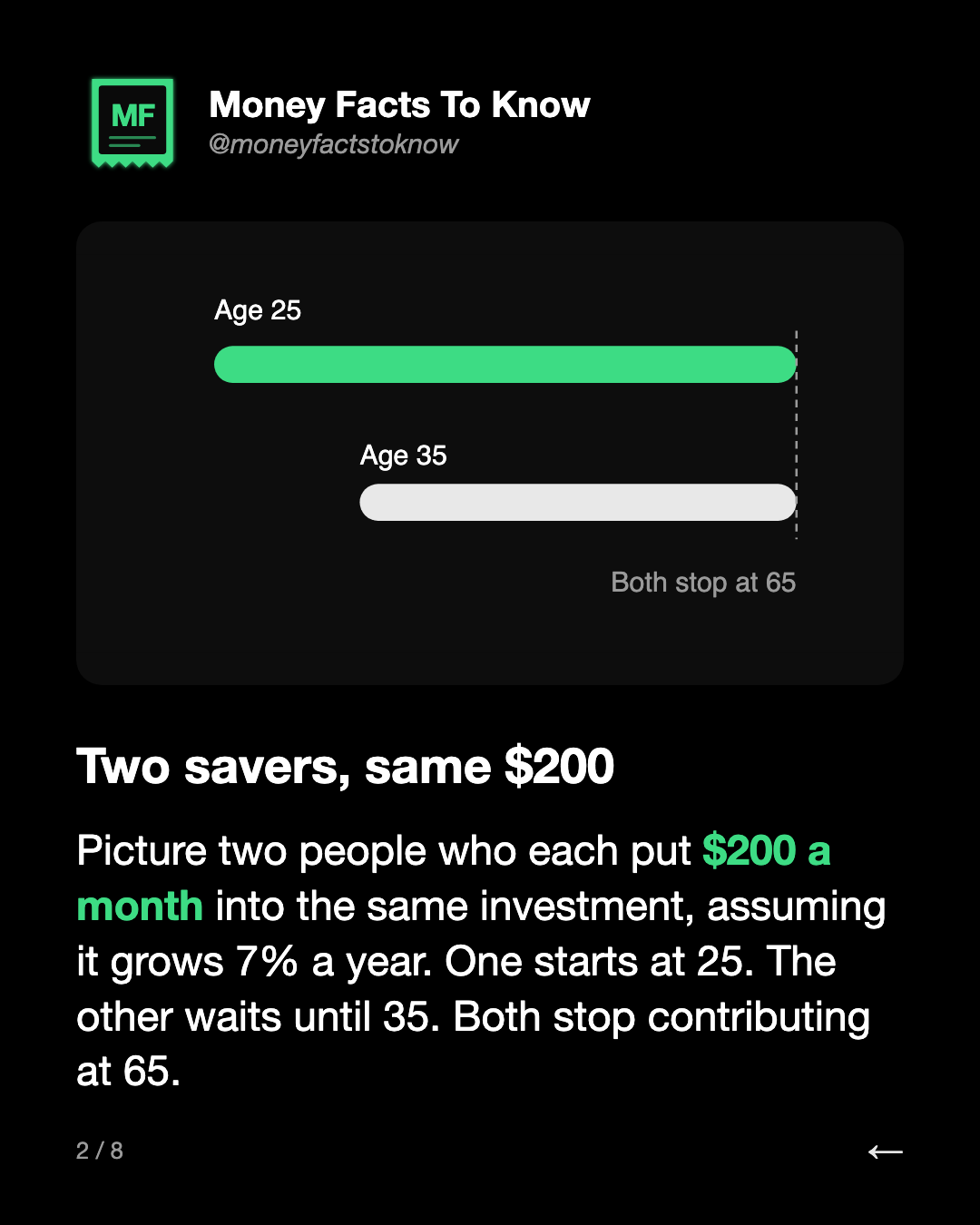
Two savers, same $200. Picture two people who each put $200 a month into the same investment, assuming it grows 7% a year. One starts at 25. The other waits until 35. Both stop contributing at 65.
Two savers, same $200

Picture two people who each put $200 a month into the same investment, assuming it grows 7% a year. One starts at 25. The other waits until 35. Both stop contributing at 65.

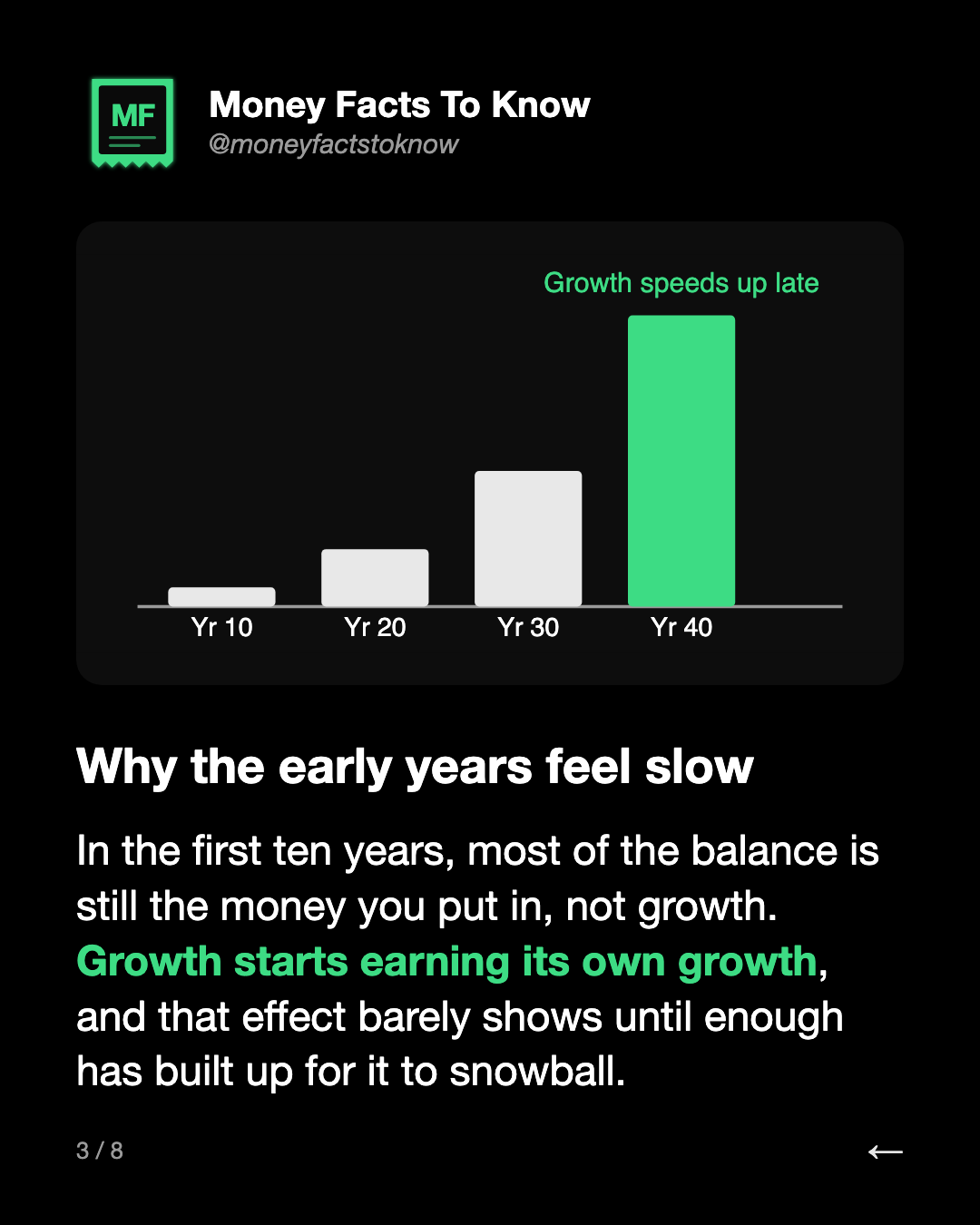
Why the early years feel slow. In the first ten years, most of the balance is still the money you put in, not growth. Growth starts earning its own growth, and that effect barely shows until enough has built up for it to snowball.
Why the early years feel slow

In the first ten years, most of the balance is still the money you put in, not growth. Growth starts earning its own growth, and that effect barely shows until enough has built up for it to snowball.

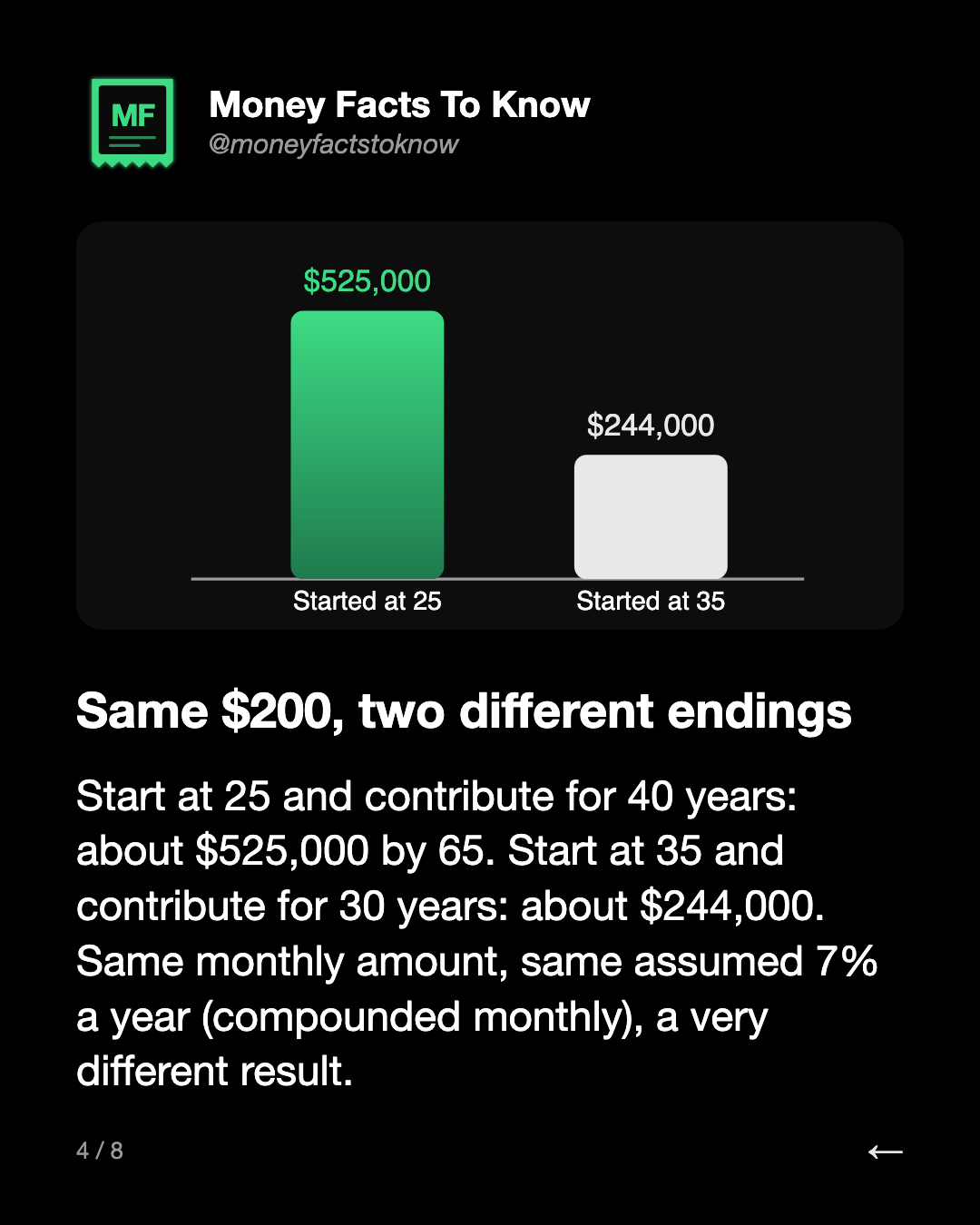
Same $200, two different endings. Start at 25 and contribute for 40 years: about $525,000 by 65. Start at 35 and contribute for 30 years: about $244,000. Same monthly amount, same assumed 7% a year (compounded monthly), a very different result.
Same $200, two different endings

Start at 25 and contribute for 40 years: about $525,000 by 65. Start at 35 and contribute for 30 years: about $244,000. Same monthly amount, same assumed 7% a year (compounded monthly), a very different result.

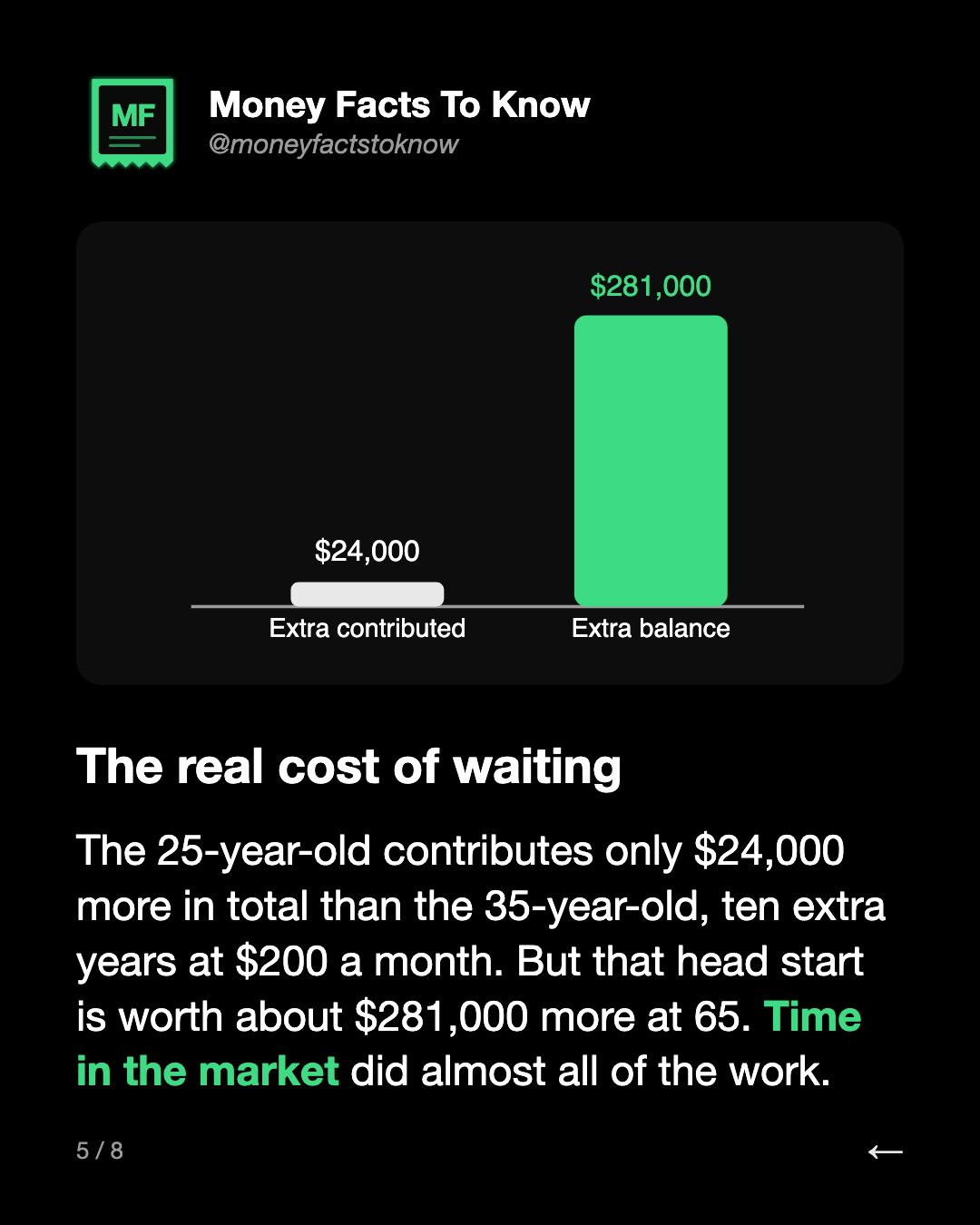
The real cost of waiting. The 25-year-old contributes only $24,000 more in total than the 35-year-old, ten extra years at $200 a month. But that head start is worth about $281,000 more at 65. Time in the market did almost all of the work.
The real cost of waiting

The 25-year-old contributes only $24,000 more in total than the 35-year-old, ten extra years at $200 a month. But that head start is worth about $281,000 more at 65. Time in the market did almost all of the work.

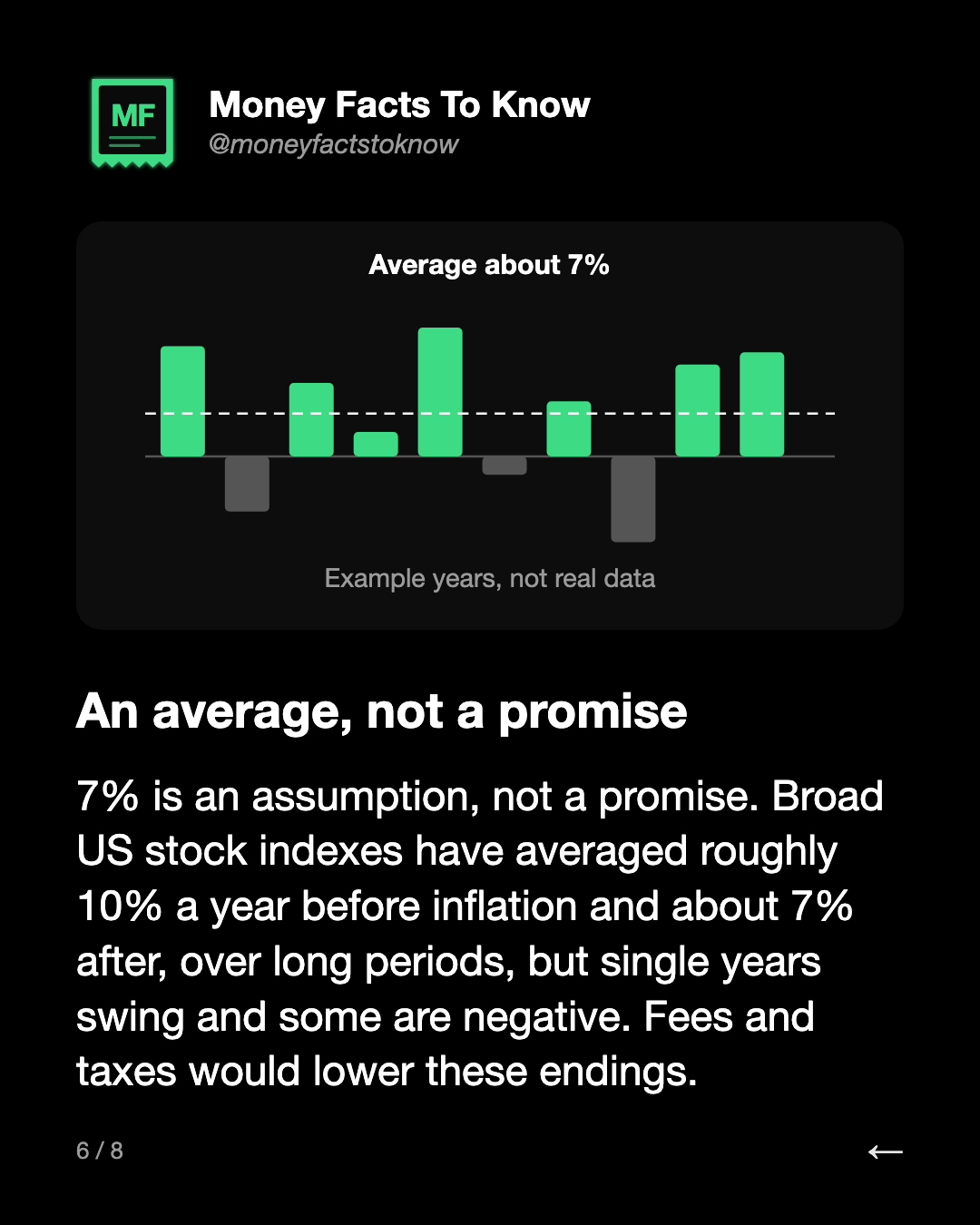
An average, not a promise. 7% is an assumption, not a promise. Broad US stock indexes have averaged roughly 10% a year before inflation and about 7% after, over long periods, but single years swing and some are negative. Fees and taxes would lower these endings.
An average, not a promise

7% is an assumption, not a promise. Broad US stock indexes have averaged roughly 10% a year before inflation and about 7% after, over long periods, but single years swing and some are negative. Fees and taxes would lower these endings.

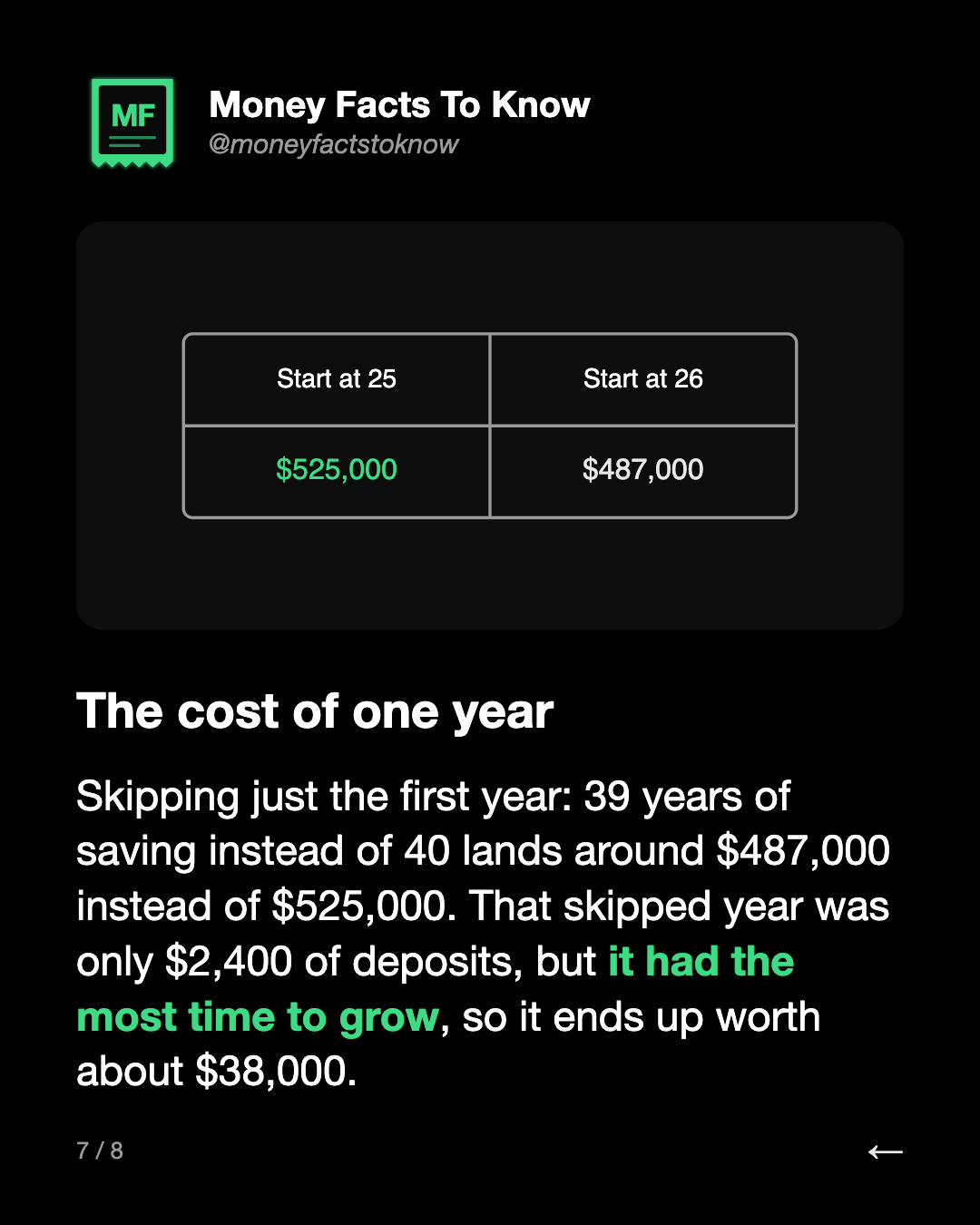
The cost of one year. Skipping just the first year: 39 years of saving instead of 40 lands around $487,000 instead of $525,000. That skipped year was only $2,400 of deposits, but it had the most time to grow, so it ends up worth about $38,000.

The cost of one year

Skipping just the first year: 39 years of saving instead of 40 lands around $487,000 instead of $525,000. That skipped year was only $2,400 of deposits, but it had the most time to grow, so it ends up worth about $38,000.
Follow @moneyfactstoknowSave this post on Instagram

More posts