 Money Facts To Know
Fictional $1,200 stolen: credit $50 max, debit $50 to $500 by timing

Two cards, two different rulebooks
Many people assume debit and credit cards protect you the same way if one is stolen. Regulation Z covers credit cards; Regulation E covers electronic transfers like debit and ATM cards.
Source: CFPB, Regulation Z and Regulation E
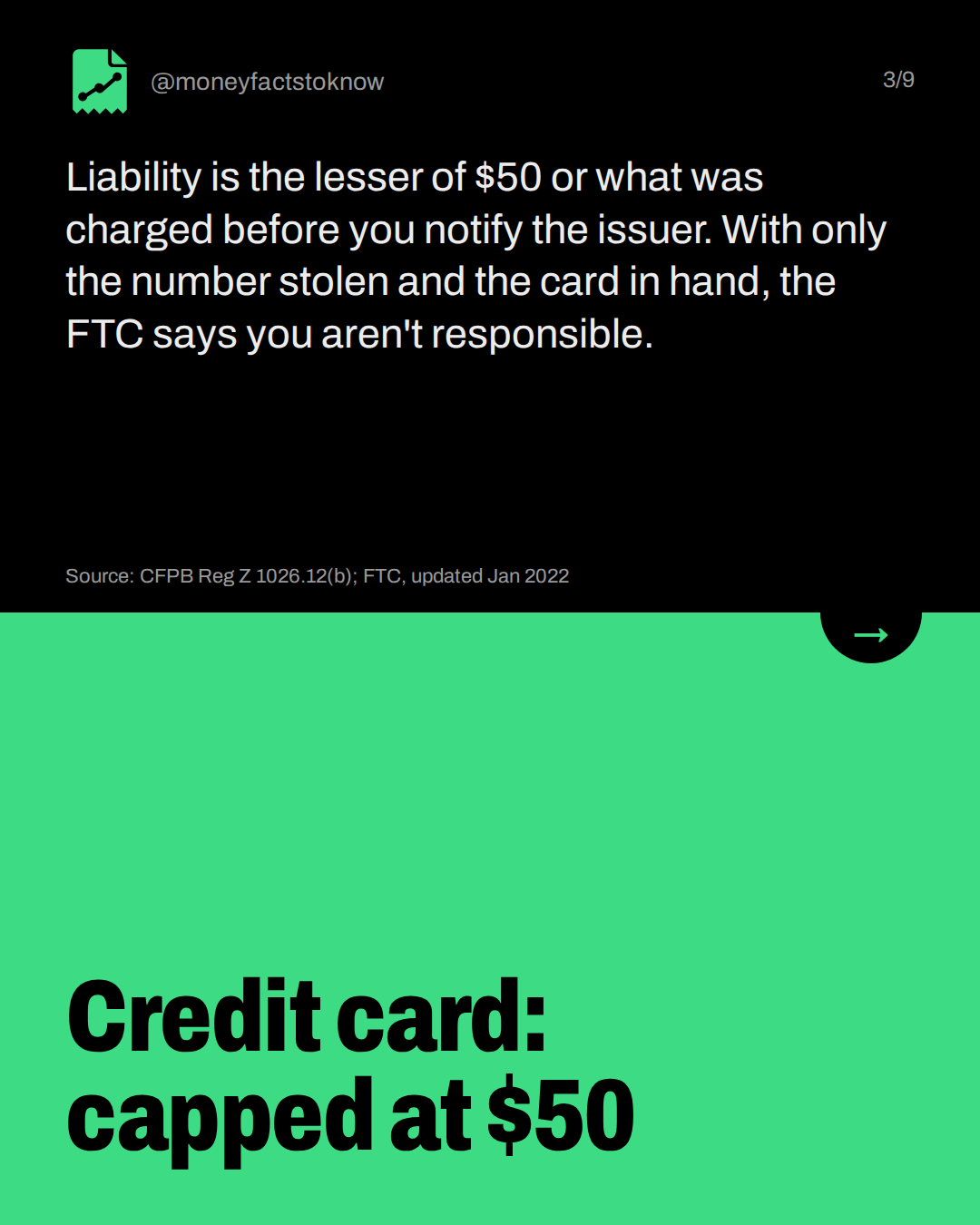
Credit card: capped at $50
Liability is the lesser of $50 or what was charged before you notify the issuer. With only the number stolen and the card in hand, the FTC says you aren't responsible.
Source: CFPB Reg Z 1026.12(b); FTC, updated Jan 2022
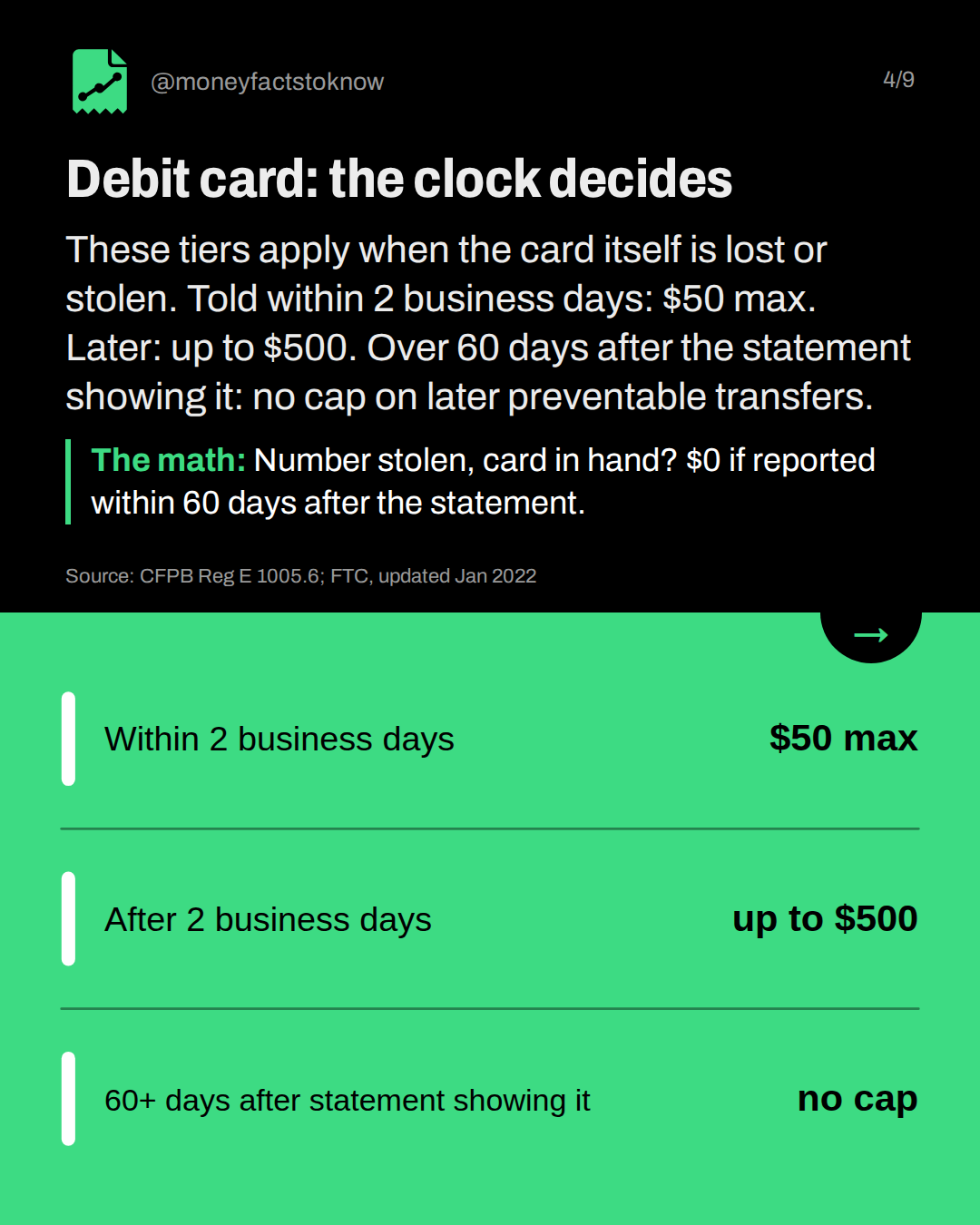
Debit card: the clock decides
These tiers apply when the card itself is lost or stolen. Told within 2 business days: $50 max. Later: up to $500. Over 60 days after the statement showing it: no cap on later preventable transfers.
The math: Number stolen, card in hand? $0 if reported within 60 days after the statement.
Source: CFPB Reg E 1005.6; FTC, updated Jan 2022
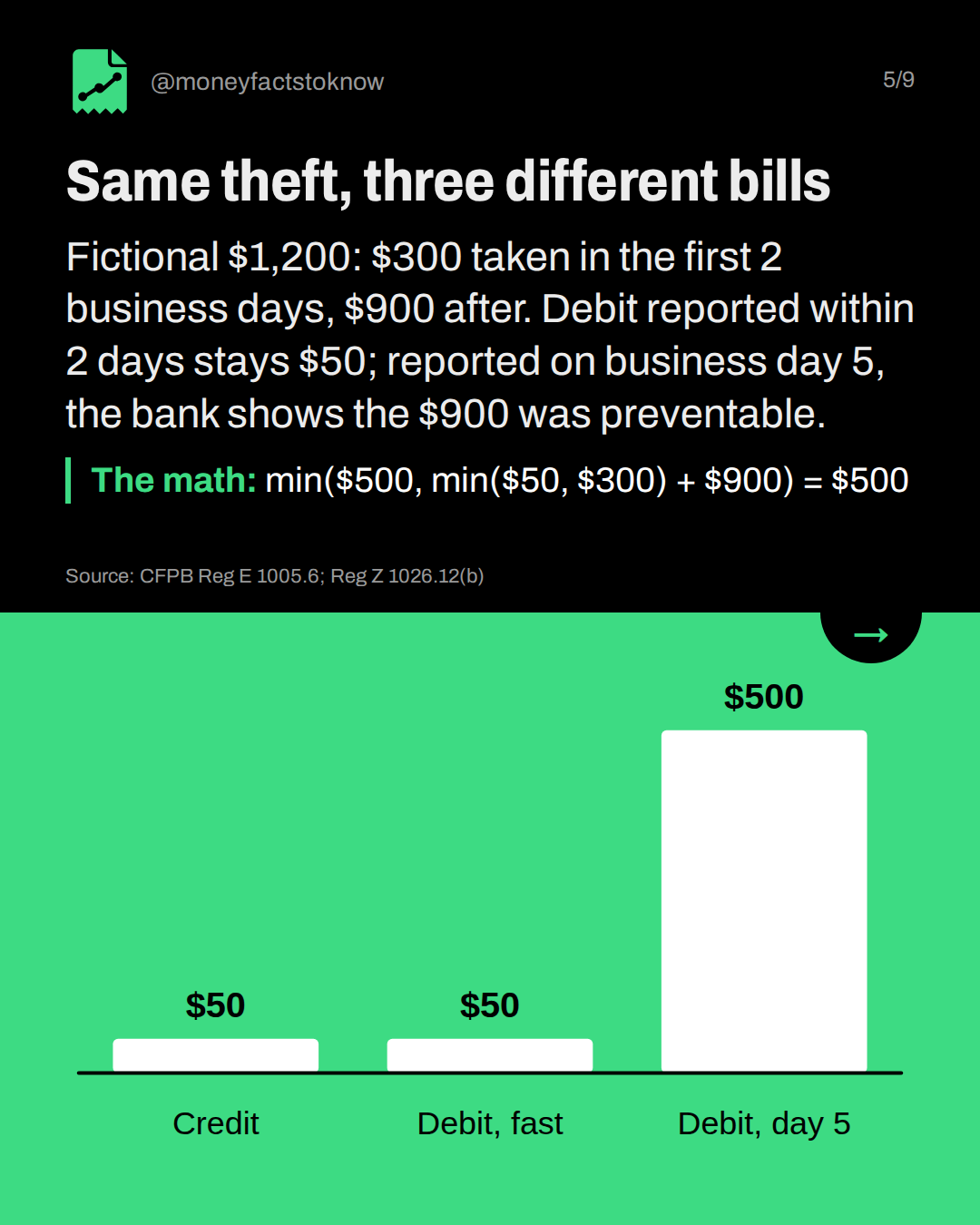
Same theft, three different bills
Fictional $1,200: $300 taken in the first 2 business days, $900 after. Debit reported within 2 days stays $50; reported on business day 5, the bank shows the $900 was preventable.
The math: min($500, min($50, $300) + $900) = $500
Source: CFPB Reg E 1005.6; Reg Z 1026.12(b)
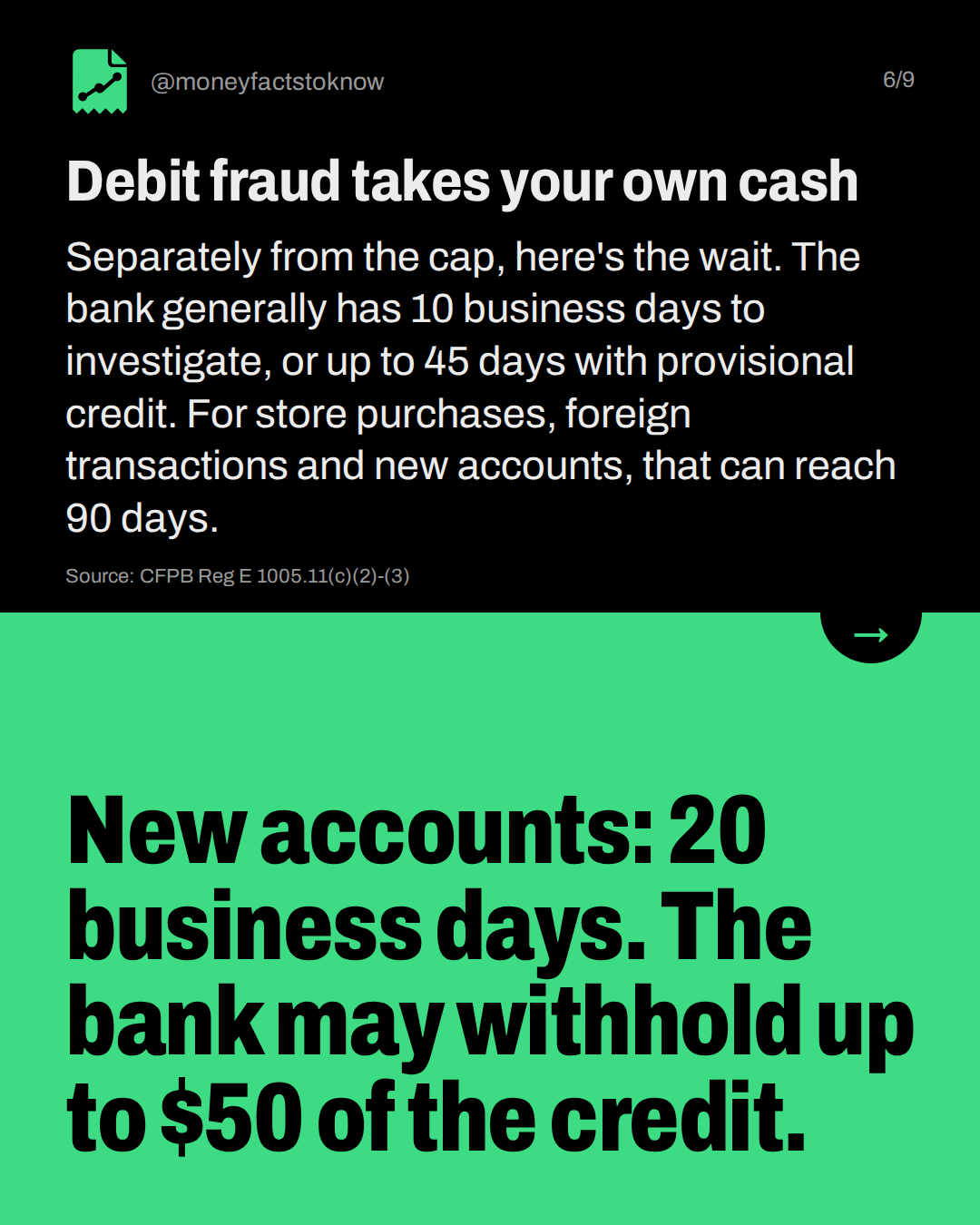
Debit fraud takes your own cash
Separately from the cap, here's the wait. The bank generally has 10 business days to investigate, or up to 45 days with provisional credit. For store purchases, foreign transactions and new accounts, that can reach 90 days.
The math: New accounts: 20 business days. The bank may withhold up to $50 of the credit.
Source: CFPB Reg E 1005.11(c)(2)-(3)
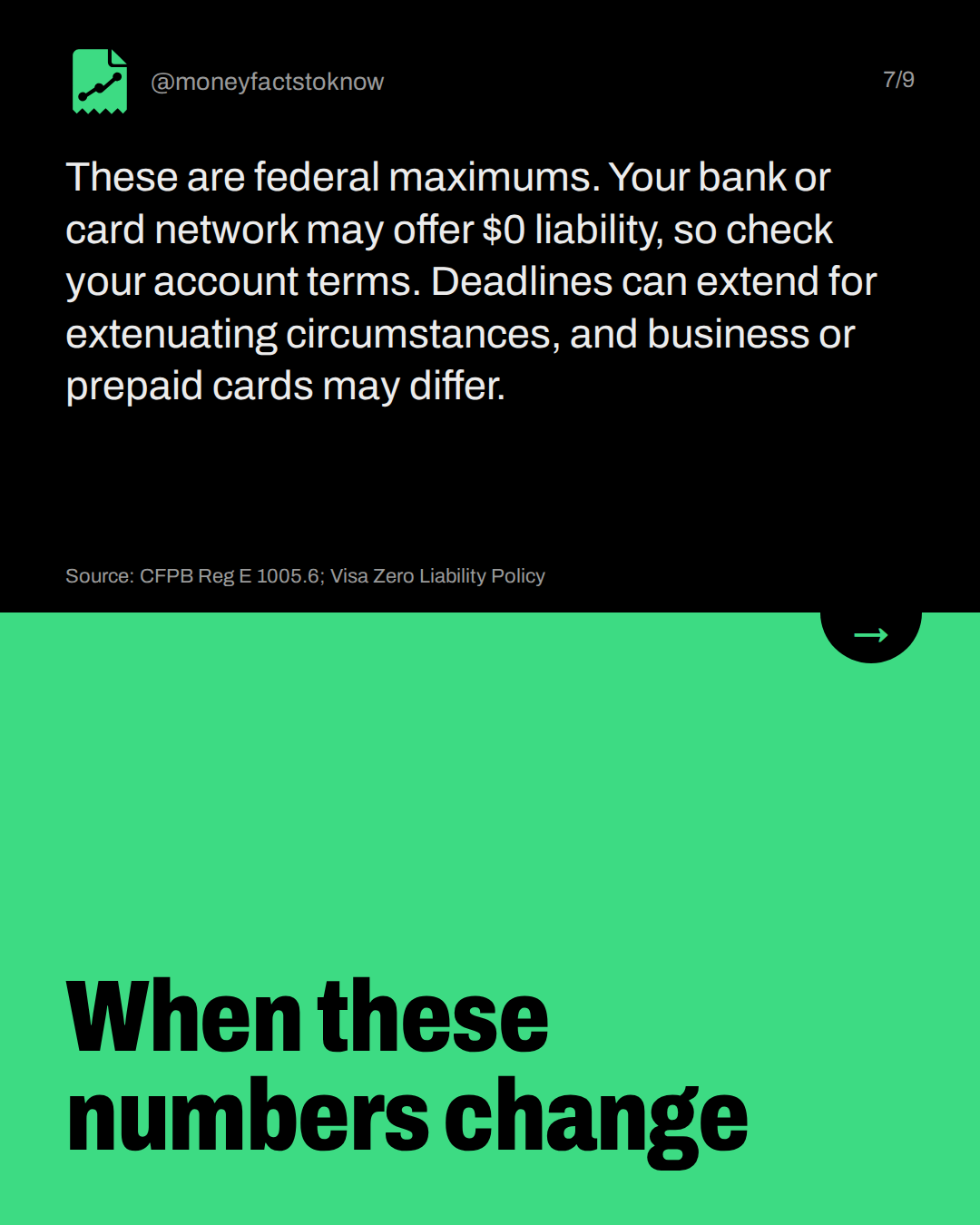
When these numbers change
These are federal maximums. Your bank or card network may offer $0 liability, so check your account terms. Deadlines can extend for extenuating circumstances, and business or prepaid cards may differ.
Source: CFPB Reg E 1005.6; Visa Zero Liability Policy
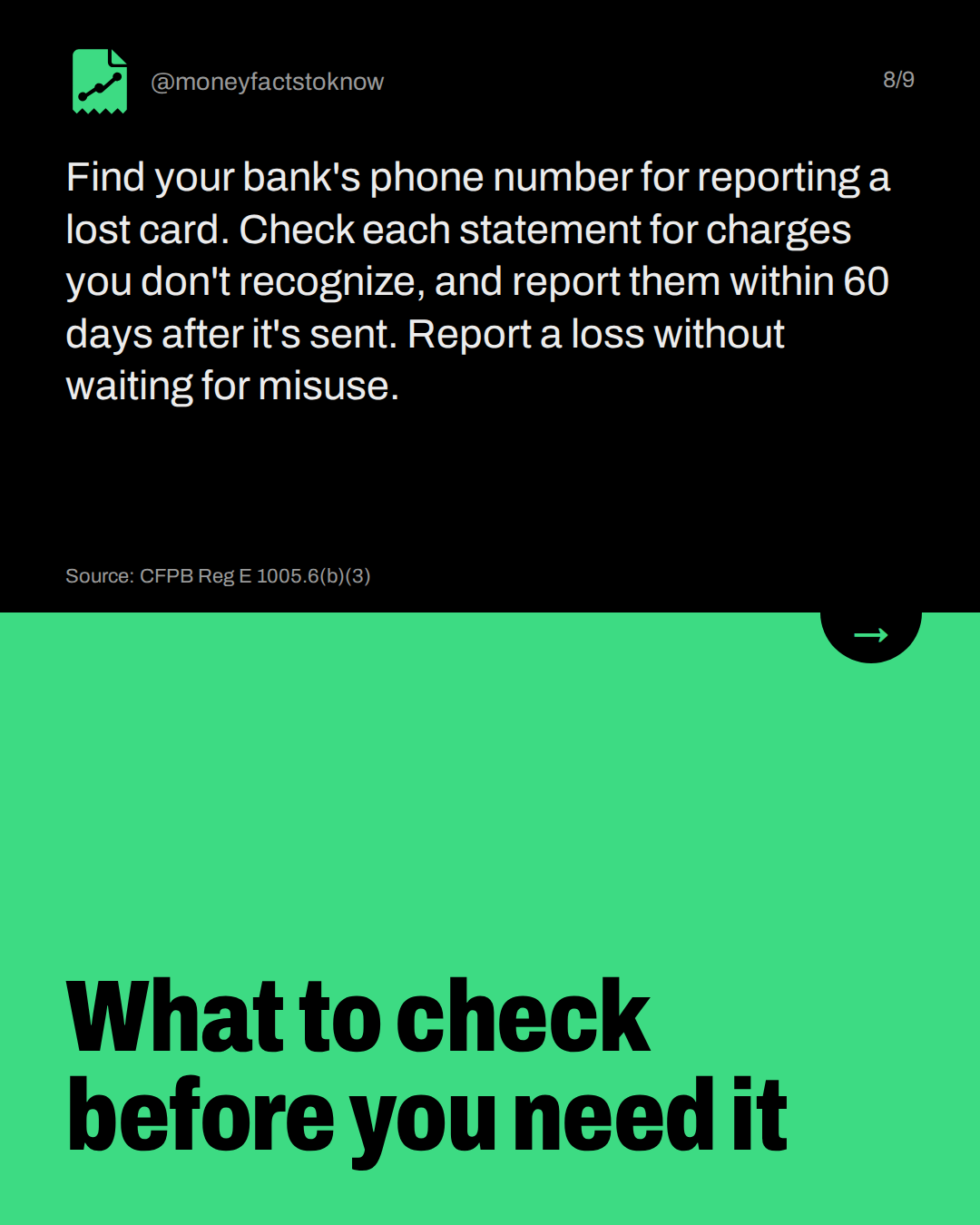
What to check before you need it
Find your bank's phone number for reporting a lost card. Check each statement for charges you don't recognize, and report them within 60 days after it's sent. Report a loss without waiting for misuse.
Source: CFPB Reg E 1005.6(b)(3)
Sources and assumptions
- CFPB, Regulation E 12 CFR 1005.6 Liability of consumer for unauthorized transfers: $50 cap if notified within two business days of learning of loss/theft of the access device; $500 cap (lesser of $500 or min($50, first-2-day transfers) + later transfers the bank shows were preventable) if later; 60-day periodic statement rule with liability for transfers after the 60 days and before notice; no-access-device case uses only the 60-day rule; extensions for extenuating circumstances (checked 2026-10-16)
- CFPB, Regulation Z 12 CFR 1026.12(b) Liability of cardholder for unauthorized use: Credit card liability can't exceed the lesser of $50 or the amount obtained before notification. Liability applies only for an accepted card, with notice of the $50 maximum and a means of identifying the cardholder (checked 2026-10-16)
- CFPB, Regulation E 12 CFR 1005.11 Procedures for resolving errors: Bank must investigate and decide within 10 business days, or up to 45 days if it provisionally credits the account within 10 business days; consumer notice of error is due within 60 days after the statement is sent (checked 2026-10-16)
- FTC Consumer Advice, Lost or Stolen Credit, ATM, and Debit Cards (updated Jan 2022): If only the credit card number is stolen and the card is still in your possession, you aren't responsible for unauthorized charges. If a debit card number is stolen with the card still in your possession, no liability if reported within 60 calendar days after the statement is sent. You owe nothing for charges after you report (checked 2026-10-16)
- Visa, Zero Liability Policy (US): "You won't be held responsible for unauthorized charges made with your account or account information." "The policy does not apply to certain commercial card and anonymous prepaid card transactions or transactions not processed by Visa." "Cardholders must use care in protecting their card and notify their issuing financial institution immediately of any unauthorized use." Issuers must replace funds "within five business days of notification", which "may be withheld, delayed, limited, or rescinded by your issuer based on gross negligence or fraud, a delay in reporting unauthorized use, an investigation and verification of a claim, and account standing and history." (checked 2026-10-16)
Assumptions:
- Fictional example: the physical debit card (or credit card) is lost or stolen and the owner learns of it the same day
- Fictional amounts: $300 of unauthorized transfers in the first two business days after learning of the theft, $900 after that and before notice, $1,200 total
- The 'day 5' late-report case assumes the bank can show the later $900 would not have happened had the owner reported within two business days (the Reg E condition)
- All reports happen well within 60 days of the statement, so the unlimited tier doesn't apply in the worked example
- Federal maximums only; voluntary $0-liability policies from banks or card networks are not assumed
- Consumer (personal) accounts; business cards and some prepaid accounts may have different terms
- Rules as of Oct 2026 (Regulation E and Regulation Z as published by CFPB)
The short version
- Credit card: $50 cap on unauthorized use
- Debit lost, told bank in 2 business days: $50
- Debit lost, told the bank later: up to $500
- Debit, past 60 days: no cap on later transfers
- Check your bank's own terms too


